Squamish council on the Woodfibre LNG plant
As of , Woodfibre LNG is building its gas export plant, which council cannot stop, and its worker run on a two year permit council approved in July 2025.
Woodfibre LNG is building a gas export plant on Howe Sound, about 7 km from downtown. Senior governments and the Squamish Nation approved it. Council did not, and cannot stop it. What council does control is local: permits for worker housing (the ‘floatel’ and workers’ lodges), rules on traffic, noise and safety, and how hard it presses the Province to enforce the plant’s conditions. In April 2024 council refused the floatel permit 4–3; the Province overrode it, and in July 2025 council approved a two-year permit 5–2. How the plant is taxed is a separate question: see Taxes and spending.
What council is doing now
The background
Woodfibre LNG is building a liquefied natural gas export plant on Howe Sound about 7 km from downtown, fed by a new FortisBC pipeline; it was approved by senior governments and the Squamish Nation, not by council, and remains divisive locally. Council's real levers are land-use permits (such as the '' worker housing) and how the plant is taxed. The biggest recent decision was a proposed 10 year deal under which Woodfibre would have paid the District at least $142 million from 2027 in exchange for a fixed, much lower municipal tax bill, and would have dropped its lawsuits over 2025 and 2026 taxes. On Sept.
22, 2026 council rejected it 5 to 2, so the question for the new council is whether to go back for a new deal. This is really two separate arguments. One is about the plant itself. The other is about money: supporters of the deal value predictable revenue and an end to litigation, while critics, including several people now on council who support the plant, said the District might be giving up revenue and that the decision was rushed.
The Woodfibre tax deal: what each choice means
Update, Sept. 22: council said no, 5–2 (Stoner, Hamilton and Pettingill against; Andersen and French for). The new council could still negotiate a new deal, so where each member stands still matters. Squamish Reporter
This is a question about money. It is not a vote for or against the plant, which is already being built, and candidates who support the plant are on both sides of it.
If council says yes
- At least $142 million over 10 years, fixed in advance: about $14.2 million a year on average, with the biggest payments in the first five years.
- The court cases end. Woodfibre drops its three legal actions over the 2025 and 2026 tax rates, with no refunds.
- No risk from the Province or appeals. The amount holds even if the Province caps tax rates or the plant’s assessed value drops.
- But it can’t go up. Most of the money doesn’t rise with inflation, it can only be spent on building projects, and it stays the same if the plant expands.
If council says no
- Squamish still gets paid. Woodfibre keeps paying normal property tax every year. It paid $7.7 million in 2026 with the plant only part-built.
- How much is unknown. Staff estimate $9 million to $29 million a year once the plant is finished, depending on the tax rate council sets. Today’s rate is about four times the B.C. average, and the District says keeping it that high for 10 years “would be unusual”.
- The court cases go ahead, and the Province could cap the tax rate (as it does for ports and utilities) or change how LNG plants are valued.
- A new council could try for a better deal. Nothing guarantees a new offer, and one could not start before 2028.
District staff say normal taxes “could be either higher or lower” than the deal and make no recommendation. District of Squamish: questions and answers on the deal.
Key facts
- Result: on Sept. 22, 2026 council voted 5–2 to reject the proposed 10-year agreement. Against: Mayor Armand Hurford and Couns. Jenna Stoner (who moved the motion), Lauren Greenlaw, Andrew Hamilton and Chris Pettingill. For: Couns. Eric Andersen and John French. A future council could still consider another agreement. [source]
- The plant will produce 2.1 million tonnes of LNG per year, is expected to operate about 40 years, and the District lists completion as expected in 2027. [source]
- Proposed agreement: $117 million in fixed Community Enhancement Payments over 10 years ($10M in 2027; $16M/yr 2028-2030; $15M in 2031; $10M/yr 2032-2033; $8M/yr 2034-2036; not inflation-indexed; capital projects only) plus municipal property tax fixed at $2.5 million in 2027 with CPI adjustments via a Revitalization Tax Exemption bylaw, for a total of at least $142 million. [source]
- District staff say revenue under regular taxation 'could be either higher or lower' than the agreement; the documents can be accepted or rejected but not amended; WLNG's 2025 and 2026 legal proceedings would be dismissed by consent if approved. [source]
- Under normal taxation, the District says Woodfibre LNG paid $7.7 million in municipal property tax in 2026 while still under construction, at a major industry rate of $125 per $1,000 of assessed value, about four times the B.C. average for that class. The District itself says keeping that rate for 10 years “would be unusual”. [source]
- During the campaign, Sean Easton (now mayor) said council should vote no on the proposed agreement. [source]
- Floatel: the first floating worker camp has housed workers since June 2024 (about 650 workers); on July 29, 2025 council approved a two-year Temporary Use Permit covering the existing vessel and a proposed second vessel. Workers are ferried to and from the Lower Mainland and have no recreational access to the community. [source]
- FortisBC's Eagle Mountain-Woodfibre Gas Pipeline adds about 50 km of pipeline from Coquitlam to the site, including a roughly 9 km tunnel under the Skwelwil'em Squamish Estuary; in-town work includes 2 km of pipe along Finch Drive and Industrial Way in 2026. [source]
- In the Chief's reader survey, 'attitude toward industry and LNG' ranked low on average (6.17 of 9) but was polarizing: nearly 14% put it in their top three and more than half in their bottom three. [source]
- Would normal taxes bring in more? Nobody knows. District staff estimate that without the deal, the finished plant would pay between $9 million and $29 million a year depending on the tax rate council could sustain, compared with an average of $14.2 million a year under the deal. Staff say regular taxation “could be either higher or lower” and make no recommendation. [source]
- Why not far more? Staff assume the finished plant will be assessed at only $400–600 million, not its $5-billion-plus construction cost, because the Province sets how heavy industry is valued and depreciated. [source]
- What critics of the deal point to: the $117 million in payments never rises with inflation, is front-loaded (about $18.5 million a year in 2028–30, falling to about $10.5 million by 2034–36), can only be spent on capital projects, does not increase if the plant expands, and must be partly repaid if Woodfibre’s tax bill ever rises above the agreed amount, so $142 million works as a ceiling as well as a floor. [source]
- What supporters of the deal point to: the Province could change how LNG plants are valued or cap the tax rate (it already caps port and utility rates in Squamish), Woodfibre could win assessment appeals, and three court actions over the 2025 and 2026 tax rates would be dropped with no refunds. [source]
- Process: council could only accept or reject the deal, not amend it. With the deal rejected, normal taxation continues in 2027 (not zero revenue), and a future council could still consider another agreement. [source]
- During the campaign, opposition to the deal was about money and timing, not the environment: Sean Easton, Janice DesJardins and Laura Prosko (all now on council) wanted it rejected or delayed for a better one, and none of them opposed the plant itself. At the Sept. 22 vote, the outgoing councillors Stoner, Hamilton and Pettingill voted to reject it; Andersen and French voted for it. [source]
Agree or disagree?
Where each council member lands on this statement, from their own questionnaire answers or their public record. Tap a name for the detail.
“The District should use its permit powers to press Woodfibre LNG on local impacts, even if that means delays or legal fights.”
What does this mean?
What council can actually do: It cannot stop the Woodfibre LNG plant; senior governments approved it and it is being built. Council controls local permits, such as the floating worker housing (the “floatel”) and workers’ lodges, plus local rules on traffic, noise and safety, and it can press the Province to enforce the plant’s conditions.
In 2024 council refused the permit for Woodfibre’s floating worker housing 4–3; the Province overrode it, and Woodfibre is now suing over the delay. The other view: approve permits promptly and work with the company. The tax deal is a separate question.
 Shaun Veltkamp
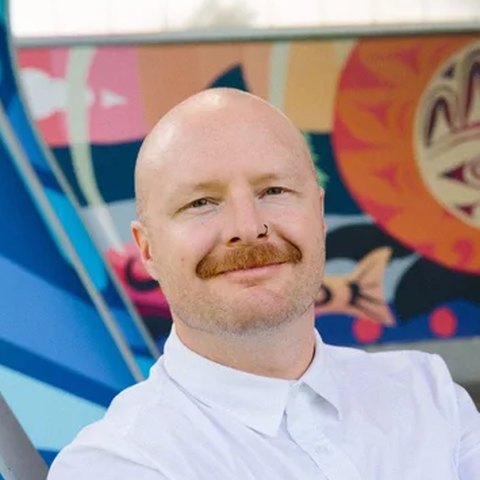 Sean Easton
 Janice DesJardins
 Sarah Ellis
 Laura Prosko
 Eric Andersen
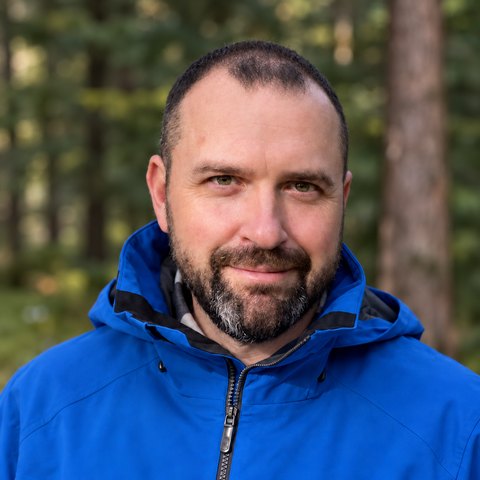 Luc Perreault
- Sean Easton (mayor) Somewhat agrees
“Woodfibre is here to stay - we need to use every tool available to ensure we protect our people's health, our air and water quality, and leave a meaningful legacy to Squamish.”
- Janice DesJardins In the middle
“We need to be reasonable.”
- Sarah Ellis In the middle
“My expectation is that WLNG is accountable to all levels of government with regular reporting and responsiveness to concerns. I expect WLNG to help pay for the District’s 10-year capital plan either through taxation or a fair tax deal, and have not seen enough analysis to be convinced that the current tax deal in front of Council achieves this.”
- Luc Perreault Strongly disagrees
“I would have supported the agreement because I want the District to have a strong, workable relationship with Woodfibre LNG. That relationship should be respectful, accountable, and built on clear expectations from both sides. Whether people support the project or not, the reality is that if the facility operates successfully, it will be part of our community for decades. I believe we can often achieve more through constructive engagement and partnership than through constant conflict and litigation. A stable relationship creates opportunities for ongoing dialogue about community benefits, infrastructure investments, local employment, environmental accountability, and other issues that matter to residents. That doesn't mean giving anyone a free pass. It means holding partners accountable while working together toward outcomes that benefit Squamish. My preference is to build relationships that are firm but respectful, because I believe that approach is more likely to deliver long-term benefits for our community than continued uncertainty and legal disputes.”
- Laura Prosko Didn’t pick an answer
“The question does not make sense without addressing Council’s relationship with Woodfibre LNG and the need to renegotiate an agreement that delivers greater long-term financial benefits to Squamish.”
- Shaun Veltkamp Strongly agrees
“Without question we need to meet Woodfibre LNG with a strong business tone. They are slated to make 8+ BILLION over 15 years after they pay down their capital costs, and are now trying to push back against our heavy industry mill rate. We will then be sucking back their emissions with the strong inflow we have daily in Squamish. We need a FAIR deal in Squamish and that will be informed by data based on all comparables. It's very easy for them to dangle a large number in front of everyone and expect people to be blinded by that... it's a smart business move on their part. We need to have a smart business move in return and push for strong value in return, not leave millions on the table.”
Comments they added when answering our questionnaire during the campaign, unedited.
What each council member has said
The mayor first, then council, in alphabetical order. Our summary of the public record; tap [source] to check it.
Sean Easton (mayor)
Use every tool to protect health, air and water from Woodfibre LNG
In a Sept 14, 2026 op-ed he asked council to reject the proposed 10-year WLNG agreement, saying about $14M a year is not enough to leave a lasting asset, the money should be committed to a community-selected legacy project, and the pre-election timeline shuts out the public. He wants robust environmental monitoring of WLNG. He has not said he opposes the plant itself. [source]
“Making such a consequential decision under duress and without meaningful public engagement is irresponsible.”
Eric Andersen · also on the last council
Pro-permit on Woodfibre LNG
Has supported the permits for Woodfibre LNG’s floating worker housing, and voted for the proposed 10-year Woodfibre tax agreement, which council rejected 5–2 on Sept. 22, 2026. [source]
“I support natural gas as a 'bridging fuel, and I support WLNG's ongoing efforts to protect (and enhance, through extensive site remediation investments) the local marine environment. (2022)”
[quote source]Janice DesJardins
Renegotiate the WLNG tax deal for more money; sees WLNG as the town's only economic engine
Does not support the Woodfibre LNG 10-Year Agreement in Principle, saying more money could be negotiated and a new council should reset the relationship, while describing WLNG as currently Squamish's one and only economic engine that the town has to work with. [source]
“This should be done with a new council who does a reset on the relationship with WLNG.”
Sarah Ellis
In the middle on Woodfibre LNG, wants a fair tax deal
Sarah had said little in public about this before answering our questionnaire. Sarah’s own answers are below. [source]
Luc Perreault
Strongly for the Woodfibre tax deal and against pressing the plant through permits
Luc had said little in public about this before answering our questionnaire. Luc’s own answers are below. [source]
Laura Prosko
Wants the Woodfibre deal renegotiated for more money
A former Woodfibre LNG stakeholder/Indigenous/government relations lead (2020-May 2025). Wants a stronger 10-year financial agreement, a 40-year operations-long MOU, legacy projects, a Squamish Nation-held liaison role, and says the current tax/community contribution agreement should wait until after the election. Says economic growth and environmental stewardship 'must go hand in hand' with 'strong environmental oversight and accountability'. [source]
“I believe it needs to be reviewed with fresh perspectives, and we need to hold off and make sure that we have the best deal for Squamish.”
Shaun Veltkamp
Wants a harder bargain with Woodfibre LNG (“not leave millions on the table”)
Shaun had said little in public about this before answering our questionnaire. Shaun’s own answers are below. [source]
Other issues
- growth and development
- housing
- homelessness and supportive housing
- policing and community safety
- property taxes and spending
- climate and the environment
- transit and Highway 99
- parking
- jobs and the local economy
- Brennan Park and recreation
- flood protection
- childcare, short-term rentals and vanlife
- the Woodfibre tax deal
Get it by email, once a week
Every Friday morning: what council decided that week and what’s coming up. Plain words, nothing else. Unsubscribe any time.
Sent by Squamish Voters (Jeff Kirdeikis, Squamish, B.C.). We never share your address. See this week’s email.