The Woodfibre LNG tax deal
The District has proposed a 10-year agreement fixing what Woodfibre LNG pays in place of normal property tax. Here is what it means and where every candidate stands.
The Woodfibre tax deal: what each choice means
Update, Sept. 22: council said no, 5–2 (Stoner, Hamilton and Pettingill against; Andersen and French for). A future council could still negotiate a new deal, so where candidates stand still matters. Squamish Reporter
This is a question about money. It is not a vote for or against the plant, which is already being built, and candidates who support the plant are on both sides of it.
If council says yes
- At least $142 million over 10 years, fixed in advance — about $14.2 million a year on average, with the biggest payments in the first five years.
- The court cases end. Woodfibre drops its three legal actions over the 2025 and 2026 tax rates, with no refunds.
- No risk from the Province or appeals. The amount holds even if the Province caps tax rates or the plant’s assessed value drops.
- But it can’t go up. Most of the money doesn’t rise with inflation, it can only be spent on building projects, and it stays the same if the plant expands.
If council says no
- Squamish still gets paid. Woodfibre keeps paying normal property tax every year. It paid $7.7 million in 2026 with the plant only part-built.
- How much is unknown. Staff estimate $9 million to $29 million a year once the plant is finished, depending on the tax rate council sets. Today’s rate is about four times the B.C. average, and the District says keeping it that high for 10 years “would be unusual”.
- The court cases go ahead, and the Province could cap the tax rate (as it does for ports and utilities) or change how LNG plants are valued.
- A new council could try for a better deal. Nothing guarantees a new offer, and one could not start before 2028.
District staff say normal taxes “could be either higher or lower” than the deal and make no recommendation. District of Squamish: questions and answers on the deal.
Where the candidates stand
“The District should sign the proposed 10-year tax agreement with Woodfibre LNG.”
What does this mean?
The tax deal: Woodfibre LNG would pay Squamish at least $142 million over 10 years — a fixed, much lower tax bill plus set yearly payments — and drop its lawsuits over its 2025 and 2026 taxes.
This is about money, not whether you like the plant. If yes: $142 million is locked in and the court cases end, but the amount can’t go up. If no: Woodfibre keeps paying normal taxes — staff guess $9 to $29 million a year — the court cases carry on, and the Province could cap the rate.
 Eric Andersen
 John French
 Luc Perreault
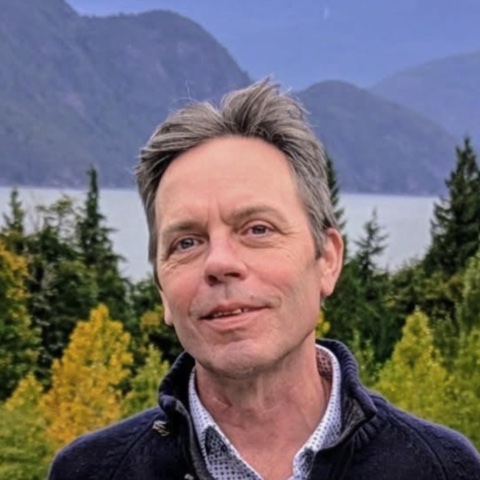 Chris Ryan
 Kieran Brownie
 Sarah Ellis
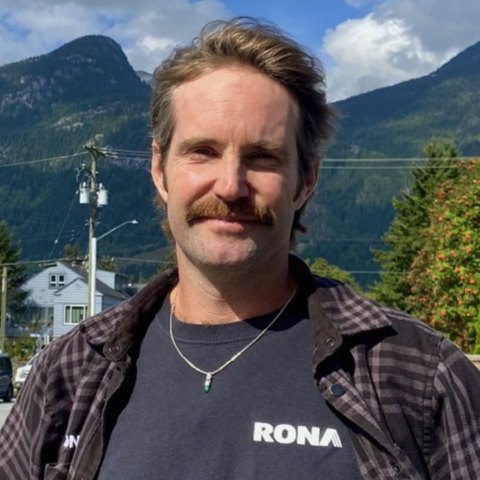 Sean Goodwin
 Shaun Veltkamp
 Ian Brown
 Andrew Hamilton
 Anders Ourom
 Daniel Deal
  Sean Easton
  Jenna Stoner
  Janice DesJardins
 A. John Lowe
 Chris Pettingill
 Laura Prosko
- Sean Easton (for mayor) Strongly disagrees
“I called on the current Council to reject this deal so a new Council could negotiate one that actually delivers for Squamish, including a real recreation centre.”
- Jenna Stoner (for mayor) Strongly disagrees
“I moved the motion to decline it. The payments wouldn't rise with inflation, which shifts rising costs onto local taxpayers, and we had no projects ready to build - so we'd have locked in a fixed amount against costs that keep climbing.”
- Sean Goodwin In the middle
“I supported taking the current deal mainly because it would nice to get something going for the community, rather than more time going by with nothing. There are definitely pros and cons to taking and declining the deal.”
- A. John Lowe Strongly disagrees
“I believe with any of this type of negotiations there are pluses and minuses that don't often show up. It is important to not just look at the cold hard facts but as a community we need to consider the fringe areas and negotiate to our satisfaction as well as co-operate. In the end it has to be a mutually beneficial agreement. Just don't rule out the possible side benefits”
- Anders Ourom Didn’t pick an answer
“This question is now dated, but a stable, long term solution is clearly needed.”
- Luc Perreault Strongly agrees
“Based on the information available, I would have supported the agreement. For me, this is less about whether someone supports or opposes the project and more about responsible financial management on behalf of taxpayers. The District has the authority to set its industrial tax rate, but the fact remains that we are currently involved in litigation. At some point, the courts will provide direction on what is reasonable, and future tax rates will likely need to reflect that outcome. If the District is successful, that's great. If not, we could face significant costs, uncertainty, and the challenge of establishing a new tax rate framework moving forward. I also recognize that litigation is expensive. The longer disputes continue, the more uncertainty exists for both the District and Woodfibre LNG. As someone who believes in long-term planning, I see value in reducing uncertainty whenever possible. One of the things that appealed to me about the agreement was the predictability. A guaranteed revenue stream over ten years would have provided certainty for financial planning, infrastructure investment, and asset management. When you're managing major infrastructure projects, predictable funding allows you to plan better, prioritize work, and often save money over the long term. I also understand that tax agreements between governments and large industrial projects are not uncommon. They can provide stability for both parties and help establish a workable long-term relationship. That doesn't mean we leave money on the table without asking questions. The District has a responsibility to negotiate in the best interests of residents. But given the certainty of the proposed revenue, the cost and uncertainty of ongoing litigation, and the importance of maintaining a productive relationship with one of the largest taxpayers in the community, I would have supported the agreement. At the end of the day, my responsibility is to look at long-term financial sustainability. Pre”
- Laura Prosko Strongly disagrees
“I proposed a different deal in my Five Point Plan.”
- Chris Ryan Strongly agrees
“Perhaps, instead of fighting, negotiate and work with them to help with a legacy project like Brennen Park. Could we create a enviromental fee for natural gas flaring as we do with water and beer bottles?”
- Shaun Veltkamp In the middle
“This needs to be negotiated based on data with comparables across the province and country. I would consider it a win if we could structure it as a more up-front payment to allow the DOS some leverage to start on some infrastructure projects faster.”
Comments candidates added when answering our questionnaire, unedited.
For the wider debate about the plant itself, see climate and the Woodfibre LNG plant. For property taxes generally, see property taxes and spending.