Where the candidates stand on jobs and the local economy
The background
Many Squamish residents commute out of town for work, so creating local jobs is a recurring goal. That requires land and buildings for businesses (''), which compete with housing for scarce flat, flood-safe land; council set a goal of a net increase in employment space by September 2026. Tourism is a major employer and brings about two million visitors a year, but residents are increasingly unsure they benefit, citing crowding, congestion and parking.
Downtown businesses are also directly affected by the , parking policy and new mixed-use buildings. Candidates differ on how welcoming to be to industry (including LNG), how to manage visitors, and how much commercial space to require in new developments.
Key facts
- A Tourism Squamish study estimates about two million visitors in 2024 (1.9 million domestic, mostly from Greater Vancouver) who spent $408 million and generated $85 million in tax revenue; just over 65% of domestic visitors were day-trippers. [source]
- In the accompanying survey of more than 1,200 residents, 86% said tourism is important to the economy, but only 43% agreed it enhances quality of life (38% disagreed); congestion and parking were top concerns. [source]
- A 2025 study found rock climbing generated $25.4 million in local spending in Squamish in 2025. [source]
- Council's 2023-2026 Strategic Plan targets: 'create a net increase of employment lands and spaces both on land and marine by September 2026' and 'increase economic activity in the core'. [source]
- The District raised the maximum height in the C-1 Local Commercial zone from three to four storeys to support mixed-use buildings and help offset an employment-space requirement (Neighbourhood Commercial Nodes project). [source]
- The Oct. 5 all-candidates meeting is hosted by the business community's Joint Engagement Committee (Chamber of Commerce, Downtown Squamish BIA, Tourism Squamish), which also called for consultation on the downtown HEARTH housing site in April 2026. [source]
Agree or disagree?
Where each candidate lands on these 2 statements, from their own questionnaire answers or their public record. Tap a name for the detail.
“The District should cut red tape and speed up permits for builders and businesses.”
What does this mean?
Faster approvals can lower costs and bring jobs. Rules also exist to protect neighbours and the environment.
 Daniel Deal
  Sean Easton
  John French
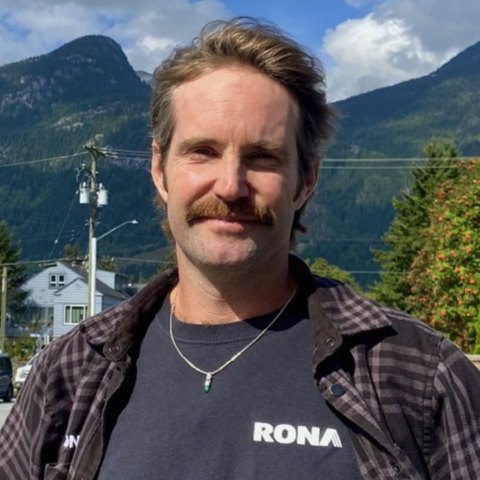 Sean Goodwin
 Luc Perreault
 Laura Prosko
 Eric Andersen
 Janice DesJardins
 Sarah Ellis
 Andrew Hamilton
 Anders Ourom
 Jenna Stoner
  Ian Brown
 Kieran Brownie
 A. John Lowe
 Chris Ryan
 Shaun Veltkamp
 Chris Pettingill
- Daniel Deal (for mayor) Strongly agrees
“With the Squamish's existing OCP to be reviewed, I believe there are several improvements we can make to keep the industry alive in Squamish. I want to see the opportunities for industry as well as small businesses. I would also like to look at bringing back or updating the Investment Incentive Program they rolled out back in 2013-2016. I believe through some of these steps we can bring and keep business in Squamish.”
- Sean Easton (for mayor) Strongly agrees
“I constantly hear that red tape slow down residents who want to contribute to our community. I'll take a common-sense approach that enforces expectations without cumbersome bureaucracy.”
- Jenna Stoner (for mayor) In the middle
“Faster shouldn't mean looser. I've voted against streamlining packages that moved decisions away from the council table without a matching gain in transparency and accountability. What I want is a public permit tracker and published processing times, so applicants get certainty without the public losing oversight.”
- Andrew Hamilton Somewhat agrees
“Rules should be clearly defined. If a developer wishes to vary a permit or rezone, then the process must be robust. The larger the variance, the more time it will take to carefully consider the impacts.”
- A. John Lowe In the middle
“It is always beneficial to cut red tape but you don't give away the farm to do it. There are professionals with credentials and oaths to adhere to. I believe we can make the builders accountable for their actions by requiring them to provide their own professionals to cut the red tape. We as a district can then hold these individuals to their professional ethics. That is a simple way to cut red tape and save the district money .”
- Luc Perreault Strongly agrees
“Absolutely, This is one of the areas where I would like to focus my energy as a councillor because the benefits are felt across the entire community. Faster and more predictable approvals help businesses invest, create jobs, build housing, and reduce costs. I also think we need to recognize that many delays are not caused by bad intentions. Sometimes applications are complex. Sometimes applicants don't fully understand what information is required. Sometimes staff are working with limited resources and competing priorities. That's why I believe the solution is not simply removing rules. The solution is creating a process that is clear, efficient, and easy to follow. We need to give Municipal Hall the tools, staffing, and resources necessary to succeed. We need a process that is easy for staff to administer, easy for applicants to understand, and designed to lead to successful outcomes. A good process should clearly explain requirements upfront, identify issues early, reduce unnecessary back-and-forth, and provide applicants with realistic timelines and expectations. When everyone understands the process, projects move forward faster and with fewer surprises. We still need rules that protect residents, neighbourhoods, and the environment. But there is no reason those protections can't exist alongside a streamlined and efficient approval system. At the end of the day, I want a District that is known for being professional, responsive, and easy to work with. When you have a well-designed process, residents are happier, businesses are happier, applicants are happier, and staff are happier. That's a win for everyone.”
- Laura Prosko Strongly agrees
“Red tape hinders a strong local economy for small businesses.”
- Shaun Veltkamp In the middle
“This is a discussion that also needs to factor in our low taxpayer base, and therefore minimal district staff. Staffing is an issue to move permitting approvals forward, so discussions need to be had within council to decide on how to best make the development permitting process more efficient, whether that be safely streamlining processes for certain types of building permits, or adding more staff to support the current process.”
Comments candidates added when answering our questionnaire, unedited.
“Land set aside for industry and jobs should be protected from being rezoned for housing.”
What does this mean?
Housing pressure makes industrial land valuable to build on — but a town with no job land becomes a commuter suburb.
5 candidates haven’t said — show names
- Sean Easton (for mayor) In the middle
“Squamish needs both thriving industry and residents who can afford to live here - we should be open-minded about the best use of each piece of land in the long-term.”
- Jenna Stoner (for mayor) Somewhat agrees
“A town with no room for jobs becomes a commuter suburb. It shouldn't be absolute, but the burden should be on the case for converting it.”
- Andrew Hamilton Somewhat agrees
“Make a plan. Stick to it. If you see the plan isn't working, change it. The whole plan, not just one parcel.”
- Laura Prosko In the middle
“This is an OCP and vision and land use planning scenario and as I have said in my Five Point Plan, you need a strong local economy so we need a balance first.”
- Chris Ryan Somewhat agrees
“This is why we need to expand the boundary for building residential and industrial projects”
Comments candidates added when answering our questionnaire, unedited.
What each candidate has said
Mayor candidates first, then council, in alphabetical order. Our summary of the public record; tap [source] to check it.
Daniel Deal (running for mayor)
Strongly for cutting red tape; protect industrial land; bring back business incentives
Wants to make it easier to do business and says he is meeting business groups to understand their problems. In written answers posted online in September 2026 he said he would adapt the Whistler Housing Authority’s employee home-ownership model, improve on the 2015 Strategy, and bring back or update the 2013–2016 Investment Incentive Program. Earlier proposals (Squamish Chief): unbundling District construction contracts so more local trades share the work, and enforcing Community Benefit Agreements on major projects. [source]
“I would also like to look at bringing back or updating the Investment Incentive Program they rolled out back in 2013-2016.”
Sean Easton (running for mayor)
Strongly for cutting red tape, with a common-sense approach
Platform pledges to 'support local businesses to thrive' and to 'ensure big business and industry fairly and transparently contribute to our community.' He points to the forestry era as a lesson that industry revenue must leave lasting community assets. [source]
“We need to ensure that the benefits industry brings continue to serve Squamish long after that industry leaves.”
Jenna Stoner (running for mayor) · current councillor
In the middle on cutting red tape — wants a public permit tracker instead; leans toward protecting industrial land
Her priorities page talks about 'supporting the people, small businesses, and community organizations that make Squamish awesome,' and in March 2026 she listed economic growth and diversification among the top issues facing Squamish. [source]
Eric Andersen · current councillor
Jobs-first: protect and build sector strategies
His signature issue. Wants land-use strategies for forestry, wood manufacturing, port lands, tourism and logistics, and warns that re-zoning former industrial land has left Squamish unprepared for high-wage employers. [source]
“What we are selling to the rest of the world from Squamish is mostly the right to live here. This is unbalanced and unsustainable. We can do better. (2022 campaign announcement)”
Ian Brown
Strongly for protecting industrial land from ; in the middle on cutting red tape
Points to the decline of large industry and over-reliance on small business; open to a range of industries as long as they match the community's identity, and supportive of ecotourism. Also wants investment in arts, culture and heritage. [source]
“Ecotourism is pretty cool, and I would definitely support that.”
Kieran Brownie
In the middle on cutting red tape and on protecting industrial land from
Argues an industrial tax base matters because otherwise residents pay more, and wants more outdoor-recreation revenue to stay in town. Wants stronger everyday services in outlying neighbourhoods. No detailed economic platform found. [source]
Janice DesJardins
Attract industry as an 'economic engine'
Wants to attract industry that provides well-paid jobs and tax revenue, noting the loss of forestry and a living wage ($28/hr) far above minimum wage. Says retail and industrial tax rates are considerably higher than residential and push businesses to close. [source]
“I want to attract industry that will function as an 'economic engine', providing new jobs and attracting new business.”
Sarah Ellis
Diverse local jobs plus workforce housing
Supports economic development across a variety of industries, paired with affordable housing so workers can live locally. [source]
“It means supporting economic development across a variety of industries, and affordable housing so workers can afford to live here.”
John French · current councillor
Limited 2026 detail; partnership with Squamish Nation and builders
His 2026 platform has no dedicated economy plank. He highlights District-Squamish Nation agreements as enabling future infrastructure (water and sewer, waste, recreation, housing). His site hosts 2022 posts on industrial land and tourism, not reviewed in detail here. [source]
Sean Goodwin
Strongly for cutting red tape; industry and development as revenue sources
Sees industry (Woodfibre LNG) and new development as the way to fund municipal needs. No specific statements found on , tourism, small business or downtown revitalization. [source]
Andrew Hamilton · current councillor
Leans toward cutting red tape and protecting industrial land
Andrew had said little in public about this before answering our questionnaire. Andrew’s own answers are below. [source]
A. John Lowe
Strongly for protecting industrial land from ; in the middle on cutting red tape — have builders supply their own certified professionals
Says the town needs to be friendlier to industry, 'but not in the old way that allowed industry to damage the environment'. Wants more value-added wood businesses rather than shipping logs straight off the foreshore, and thinks more of the allowable cut could be harvested locally. His campaign platform adds: rebuild and diversify the business and industrial tax base, and support responsible economic development that brings jobs, investment and lasting municipal revenue. [source]
“There's an opportunity because the way we're bringing the logs down, they're going down to the foreshore and then they're getting shipped away.”
Anders Ourom
Strongly for protecting industrial land from ; leans toward cutting red tape
Calls economic development “one of the most important” issues but gives one sentence on it. His detail is in outdoor recreation: promote Squamish as the gateway to the Stawamus Chief and Garibaldi parks, expand camping (including vanlife camping) across the region, consistent trailheads and signage, keep trails as private lands are developed, and charge commercial users of the Smoke Bluffs lot. [source]
“We have to have a strong, resilient economy that is business-friendly.”
Luc Perreault
Strongly for cutting red tape and protecting industrial and commercial land from for housing
Luc had said little in public about this before answering our questionnaire. Luc’s own answers are below. [source]
Chris Pettingill · current councillor
Match housing growth to employment growth; favours new and core sectors over fossil fuels
Platform calls for 'matching housing development to employment development'. In 2022 he supported focusing on 'new and core economic sectors' more aligned with community values than LNG. Former chair of the Chamber of Commerce and Inside Edge and ex-Tourism Squamish director. No detailed 2026 economic plank found. [source]
Laura Prosko
Strongly for cutting red tape for small business
Wants sub-8-week permit decisions, a small-business liaison, investment attraction in tech, film, outdoor recreation and port/rail, a Tourism Master Plan in year one, and local-content opportunities from Woodfibre LNG for Squamish businesses and workers.
Chris Ryan
Referendums on big projects; in the middle on cutting red tape
No specific plan for jobs or business. Wants port cargo moved by rail instead of trucks through downtown, and food trucks moved to the food-truck court rather than taking street parking. [source]
Shaun Veltkamp
Support trades, small business and tourism; revive economic development
Wants to support local contractors, tradespeople and small businesses, cut unnecessary red tape, revitalize the Economic Development Department, and keep Squamish 'welcoming for tourists'. Sits on the Tourism Squamish board. [source]
“Cut unnecessary red tape so Squamish workers can build their futures right here in the Sea to Sky corridor.”