Where the candidates stand on parking
The background
Parking comes up in almost every conversation about downtown and about new buildings. Council does not just decide whether to charge for parking. It also decides how much parking each new building must include, and it has often allowed less. Supporters of less parking say it makes homes cheaper to build, and that more people will walk, bike or take the bus as the town fills in. Critics say most Squamish households still need a car, often two, and that the cars simply end up on the street. There are three live questions.
First, new buildings: council can cut the required parking for one project (a ), let a builder pay cash instead of building stalls, or drop the requirement entirely, as it did in 2025 for small lots near future frequent bus routes. Second, paid parking: a 2023 District study found the downtown core close to full at peak times and recommended charging on Cleveland and Second avenues, but council has put that off until at least 2027 and is running a pilot at Darrell Bay instead, where locals pay too. Third, more supply: a 2020 study priced a downtown parkade at $10 million to $25 million, and the District says it will try managing demand first. Some candidates say downtown has a shortage of spaces. Others say it has enough spaces that are poorly managed.
Key facts
- Downtown paid parking is on hold. At a March 11, 2025 committee meeting council chose a paid-parking pilot at Darrell Bay only, which the Squamish Chief reported 'means that paid-parking will not move forward in downtown Squamish until at least 2027'. Staff are to report back with an evaluation in early 2027. [source]
- The Darrell Bay pilot started in summer 2025 and costs $3 an hour to a maximum of $10 a day in peak months (June to September), with lower fees the rest of the year. Council dropped the proposed resident pass, so locals pay too. [source]
- The District's 2023 Downtown Parking Study found the commercial core (Cleveland and Second, Main to Pemberton) 67% full on weekdays and 76% on weekends, peaking at 87-88% around noon on weekends, while downtown residential streets were about 45-50% full. It recommended paid parking, resident permits, more enforcement and loading zones. [source]
- A 2020 District-commissioned study priced a downtown parkade at about $10 million (200 stalls) to $25 million (400 stalls), or $50,000 to $63,000 per stall. It said user fees could recoup construction costs in 'anywhere from 2 to 12 years depending upon the parkade size and rate structure chosen', and that cash-in-lieu collected from developers at the then rate of $15,000 a stall would raise only about $4.7 million. [source]
- The District says it will try demand management before a parkade: 'Prior to advancing towards the construction of a parkade the District intends to use alternative parking management approaches to manage demand', such as enforcement, paid parking and resident-exempt permits, because of the cost and the land a parkade needs. [source]
- In May 2024 council unanimously removed off-street parking requirements for secondary suites, coach houses (ADUs) and multi-unit flex units, and for affordable housing projects. It kept a minimum of one stall per unit in multiplexes, which is more parking than the Province recommended. [source]
- In September 2025 council voted 5-2 to allow up to six units, with no off-street parking requirement, on R-1 and R-4 lots within 400 metres of a frequent bus route. It only takes effect once a route runs every 15 minutes; no Squamish route does yet. About 100 properties would qualify today. [source]
- Downtown developers can pay cash-in-lieu instead of building required commercial parking stalls. At 38026 Second Ave (June 2025) the developer paid $150,000 for five stalls, which is $30,000 a stall. [source]
- Council has been sending developers' parking cash-in-lieu to the Alternative Forms of Transportation Reserve Fund rather than the Off-Street Parking Facilities Reserve Fund, which exists to pay for parking infrastructure. In April 2026 it did so with $210,000 from the 38140 Third Ave project, over the objections of councillors Andersen and Greenlaw. [source]
- The Squamish Chief reported in May 2025 that councillors 'are typically in favour of parking variances', but most balked at a University Highlands proposal to cut required parking from 723 stalls to 439 (about 40%) because of poor transit to the hilltop site. Staff had supported the cut, saying full parking would likely mean dropping the 32 affordable units. [source]
- More than 2,600 people answered the District's 2024-25 parking survey. Themes reported to council included cost of living, where downtown employees would park, business fears of losing customers to places with free parking, frustration with how much parking new developments provide, and the needs of seniors and people with mobility issues. [source]
Agree or disagree?
Where each candidate lands on these 4 statements, from their own questionnaire answers or their public record. Tap a name for the detail.
“New buildings should have to provide enough parking for the people who live there, instead of being approved with less.”
What does this mean?
Council decides how much parking a new building needs. It can cut that number for one project (a “variance”), let the builder pay cash instead of building stalls (“cash-in-lieu”), or drop the requirement altogether, as it has near future frequent bus routes. Less parking makes homes cheaper to build and suits people without cars. Critics say the cars end up on the street.
 Daniel Deal
  Sean Easton
  Ian Brown
 Janice DesJardins
 A. John Lowe
 Anders Ourom
 Luc Perreault
 Laura Prosko
 Chris Ryan
 Eric Andersen
 Kieran Brownie
 Jenna Stoner
  John French
 Andrew Hamilton
 Chris Pettingill
3 candidates haven’t said — show names
 Sarah Ellis
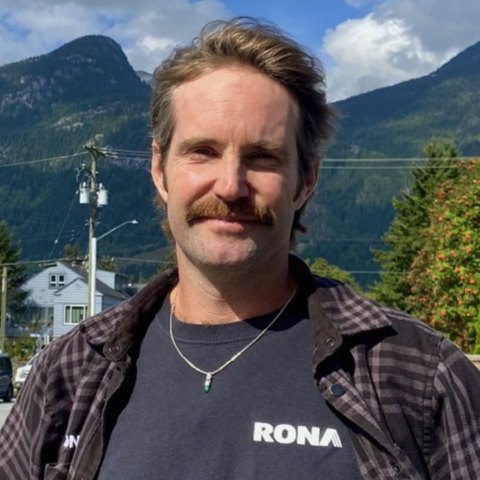 Sean Goodwin
 Shaun Veltkamp
- Sean Easton (for mayor) Strongly agrees
“I'll place a moratorium on parking variances so developers provide enough parking for the people who'll actually live there.”
- Jenna Stoner (for mayor) Somewhat disagrees
“Parking is expensive to build, and that cost lands in the price of the home. Near services and transit I've supported exchanging parking spaces for car-share memberships and transit passes for future residents because this provides a practical alternative. There is a limit, and I have a track record of voting against parking variances that I deemed went too far (e.g. downtown building with no parking, University Highlands).”
- Andrew Hamilton Strongly disagrees
“Developers will build whatever people are willing to pay for. Developers build less parking because people generally don't want to pay the true cost of the space their vehicles occupy. This is partly because many people believe they should be allowed to park on the street for free. We do not expect to swim at the pool for free; why do we expect to park on the street for free?”
- A. John Lowe Strongly agrees
“Most people have 2 or more cars within a family, the district cannot accept responsibility to find parking for them. Builders can offer parking space when developed as an extra monthly charge or simply offer additional parking as a purchase. No matter how they propose to finance parking it should be their responsibility”
- Luc Perreault Strongly agrees
“I do not support parking variances that reduce the minimum parking requirements for new developments. In my view, the current parking requirements are already close to the minimum. They were designed with the expectation that more people will use active transportation and transit in the future. While I support those goals, the reality is that many residents still rely on their vehicles every day. We are already seeing the impacts of parking shortages in parts of downtown Squamish. When developments don't provide enough parking, the problem doesn't disappear. It gets pushed onto neighbouring streets and existing residents. I believe developers should provide adequate parking for the people who will live in their buildings. If a development brings new residents, it should also help accommodate their parking needs. That doesn't mean we stop investing in transit, cycling, or walkability. We should continue supporting those options, but we also need to be realistic about how people live and travel today. My position is simple: future development should help solve our parking challenges, not add to them. As a councillor, I would support clear and consistent parking requirements that protect existing neighbourhoods while ensuring growth remains responsible and sustainable.”
- Laura Prosko Strongly agrees
“I would vote no to parking variances.”
Comments candidates added when answering our questionnaire, unedited.
“Paid parking downtown is a fair way to manage demand for spaces.”
What does this mean?
The District’s 2023 study recommended paid parking on Cleveland and Second avenues. Charging frees up spaces and raises money; some worry it pushes shoppers away. Council has put it off until at least 2027.
3 candidates haven’t said — show names
- Sean Easton (for mayor) Somewhat agrees
“We should introduce paid parking for visitors and tourists, with free parking for locals. And more importantly, we need to invest in a parkade to accommodate growing tourism.”
- Jenna Stoner (for mayor) Somewhat agrees
“It could be, as long as the system is set up so that the right people are paying for it, it would need to include some sort of local permit or free parking for the first 30 minutes, but paid parking is not a top priority for me. Parking downtown is scarce, and people -and businesses - feel the challenge every day. Managing parking, to me, means exploring low-cost, short-term solutions like road redesign, increasing accessible parking spaces, and working with businesses to explore employee parking on vacant lots.”
- Sarah Ellis Somewhat agrees
“I agree that parking management is likely in Downtown's future, but I think paid parking is just one potential solution. I think resident-only parking areas with permits should also be explored.”
- Sean Goodwin In the middle
“I think this would be a useful system if we had a day lot. Squamish residents park for free and visitors can pay hourly etc.”
- Andrew Hamilton Strongly agrees
“Please read "The High Cost of Free Parking" by Donald Shoup and/or Paved Paradise by Henry Grabar. Parking, like many things in life, comes down to a pick-two-of-three: free, available, or close. Pick two.”
- A. John Lowe Strongly disagrees
“this accomplishes nothing probably a nuisance to the public would slow the downtown traffic and probably never pay for itself. It might create another district long term issue and continuing cost.”
- Anders Ourom Somewhat agrees
“"Residents only" and "employees only" zones and permits should be considered.”
- Chris Ryan Strongly disagrees
“We can free up several spots by plugging the food truck into the purpose built food truck park, 6 trucks x 3-4 spots each. Paid parking for visitors only when we acquire loggers for angle parking”
- Shaun Veltkamp Somewhat disagrees
“A pilot project would be the best option for this... and I believe if we do move forward, we should consider yearly or seasonal parking passes for local residents.”
Comments candidates added when answering our questionnaire, unedited.
“Downtown Squamish needs more public parking, and the District should get it built.”
What does this mean?
A 2020 study priced a downtown parkade at $10 million to $25 million. Supporters say visitor fees or developers’ money could pay for it. Others say downtown has enough spaces and the real problem is how they are managed.
3 candidates haven’t said — show names
- Sean Easton (for mayor) Strongly agrees
“Parking is driving people away from downtown, and identifying a location for a parkade is one of the things I want to move on - it can pay for itself in a relatively short timeframe.”
- Jenna Stoner (for mayor) Somewhat disagrees
“A 200-stall parkade was costed at roughly $10 million before land, and our high water table makes underground structures expensive. Against everything else this community needs, that's not where the money goes first. There may be an opportunity to build parking into a future municipal hall. Council also recently approved a development downtown with a 218-stall parkade.”
- Andrew Hamilton In the middle
“I agree that downtown might need more parking. I disagree that the District should build a parking garage.”
- A. John Lowe Somewhat disagrees
“this is where private business needs to get involved with the District as a facilitator between various govt agencies and private willing individuals .”
- Chris Ryan In the middle
“We can acquire the BC rail land along loggers lane that can accomplish 2 problems, continuing the Feather Park bike lane with angle parking along side. Also, make vacant land owners downtown to clean up their lot and convert to a temporary parking solution”
Comments candidates added when answering our questionnaire, unedited.
“If Squamish brings in paid parking, residents should park free and only visitors should pay.”
What does this mean?
In 2025 council voted 5–2 to drop the resident pass from the Darrell Bay paid-parking pilot, so locals pay there too. Some candidates want free permits for residents; others say exempting locals defeats the purpose of managing demand.
7 candidates haven’t said — show names
- Sean Easton (for mayor) Strongly agrees
“Locals shouldn't have to pay more to live here and access basic amenities, including downtown. But we should leverage more revenue from tourists who come to visit our town.”
- Jenna Stoner (for mayor) Somewhat agrees
“I'm open to resident passes, and I've said we should explore them. I'd want to understand what it does to the purpose of the program before committing.”
- Andrew Hamilton Strongly disagrees
“I believe exempting locals defeats the purpose of managing demand.”
- A. John Lowe Strongly disagrees
“I believe there is a merit for this idea but not in this situation. There should be a system in place for residents only parking in certain areas. those that live in an area and have trouble with curbside missuse”
- Chris Ryan Strongly agrees
“The money collected at Darrel Bay needs to fund a year round bus service, instead only for 3 months in the summer”
Comments candidates added when answering our questionnaire, unedited.
What each candidate has said
Mayor candidates first, then council, in alphabetical order. Our summary of the public record; tap [source] to check it.
Daniel Deal (running for mayor)
Build more downtown parking; against paid parking — if it comes, locals park free
Says the biggest thing he would have done differently is build a downtown parkade after the 2020 study. He wants paid parking for visitors only, with a free online permit (a windshield barcode) for residents, and the revenue put toward the parkade. His platform says 'No Squamish local should be penalized to travel around the town.' He says the 2020 study estimated the parkade would pay for itself in six years; the study itself gives a range of 2 to 12 years. [source]
“I read the 2020 study on the parkade …They estimated … (they) would cover the cost in six years. So we would have already been seeing profit on this parking, if they had just said yes.”
Sean Easton (running for mayor)
Build a parkade; paid parking for visitors, free for locals; a moratorium on parking
Sean had said little in public about this before answering our questionnaire. Sean’s own answers are below.
Jenna Stoner (running for mayor) · current councillor
Leans toward paid parking downtown, with residents free; leans against requiring parking in new buildings and against building a parkade
On council she moved the 2023 motion that started the paid-parking plan, seconded and voted for the defeated April 2024 motion to make paid parking by the end of 2025 a council priority, moved the 2025 bylaw removing parking minimums for six-unit lots near future frequent transit, and moved a 2025 motion to improve accessible parking downtown sooner than 2027. She called herself 'a very avid proponent of letting the market determine how much parking is necessary' while saying a 40% cut at University Highlands went too far. In 2022 she said the District should understand the problem before spending 'on new systems or infrastructure'. [source]
“I am usually a very avid proponent of letting the market determine how much parking is necessary and I am the first to be a little bit sad about the fact that we might be turning down 32 affordable units, but this feels like it's too far of a parking reduction for the location that we’re talking about.”
Eric Andersen · current councillor
Council's most consistent voice for more parking: wants developer cash-in-lieu spent on off-street parking facilities and has voted against removing parking minimums
In April 2026 he voted against sending $210,000 of developer cash-in-lieu to the alternative-transportation fund, saying it should go to the Off-Street Parking Facilities Reserve Fund. He voted against the 2025 bylaw removing parking minimums for six-unit lots near future frequent transit, and told council he did not support cutting parking at University Highlands. In 2022 he said Squamish has 'diverse parking problems' needing 'new facilities and regulations/ enforcement', and proposed wood-built parkades designed so they can be re-purposed. He voted for the paid-parking pilot but against making paid parking a 2025 priority and against studying community-wide paid parking. No 2026 campaign statement found. [source]
“We are overlooking, in our planning for the downtown, the need for off-street parking facilities and here is an example of where we can take advantage of an opportunity to put some dollars into that fund.”
Ian Brown
Strongly for more public parking downtown and for requiring parking in new buildings
Lists parking and traffic flow among the issues he wants to address, in both his Squamish Reporter announcement and his Chief launch coverage. [source]
Kieran Brownie
Leans toward paid parking downtown, with residents parking free; in the middle on requiring builders to provide parking and on the District building more
Says the biggest parking challenge is how town hall makes decisions. He says routing everyone downtown puts residents in competition with visitors in peak months; he would look to the waterfront development for parking capacity and strengthen everyday services in outlying neighbourhoods. He has not taken a position on paid parking, a parkade or parking minimums. [source]
“I think the biggest challenge for parking right now is the decision-making process of town hall. A lot of residents don't feel like they have any say in it, and they just keep being told that there will be less parking.”
Janice DesJardins
'Nowhere near enough parking spaces downtown'; wants bylaws to require adequate stalls for all housing, and a parking committee to look at angle parking, an employee lot and Loggers Lane
Parking is the first issue on her platform. She says high-density development has pushed residents' second cars onto the street and displaced downtown employees into the two-hour zones. Immediate steps: move restaurant patios off street stalls and ban food trucks from parking on Cleveland and Second between Victoria and Pemberton. She would strike a community Parking Committee to explore angle parking, a dedicated employee lot, angle parking on the old Loggers Lane rail bed and reopening side streets to parking, and task it with 'updating parking bylaws to require adequate stalls for all forms of housing — including suites' and investigating permit parking, pay parking and one-way streets. She also wants the one-stall-per-suite rule enforced. On a parkade: 'Maybe we don't need a parkade — but we do have to investigate all options first.' [source]
“There are nowhere near enough parking spaces downtown. High-density development has pushed residents with two vehicles onto the street, displacing the spots once used by downtown employees.”
Sarah Ellis
Expects parking management downtown; sees paid parking as one option alongside resident-only permit areas
In her questionnaire answer to Squamish Voters she agreed that parking management is likely in downtown's future, called paid parking 'just one potential solution', and said resident-only permit areas should also be explored. She also said she would like downtown density to come with 'realistic parking requirements', without saying whether that means more or fewer stalls. Her website lists parking among the policies that must keep pace with growth.
“I agree that parking management is likely in Downtown's future, but I think paid parking is just one potential solution. I think resident-only parking areas with permits should also be explored.”
John French · current councillor
Says downtown has a parking management problem, not a supply problem; wants usage data; backed on-street pay parking in 2022
In an Aug. 2026 blog post he concludes, after reading Shoup and Grabar, that 'what we have in Squamish is a parking management problem', lists downtown lots and garages he finds rarely full, and calls for data on how parking in new buildings is actually used. He quotes Grabar's call to abolish parking minimums and charge for the best street parking, without saying he would do the same. In 2022 he wrote 'I support an on-street pay parking program in the commercial area' and said he would not support losing more street stalls to vendors. On council he voted in April 2024 to prioritise traffic calming over paid parking by 2025, voted against studying community-wide paid parking, and voted for the six-unit/no-parking-minimum bylaw. He called a 40% parking cut at University Highlands 'a little bit exciting'. [source]
“From these thinkers who have spent a significant amount of time researching and studying parking I concluded what we have in Squamish is a parking management problem.”
Sean Goodwin
A day lot where residents park free and visitors pay; tall buildings need “more than adequate” parking
The Squamish Chief reports that 'On parking, he wants to build a day-lot system similar to Whistler.' This is the reporter's paraphrase; no direct quote, location, cost or funding detail was given. He also wants Bailey Street opened between Dentville and downtown. [source]
Andrew Hamilton · current councillor
Strongly for paid parking downtown, with no free pass for locals; against requiring parking in new buildings
Parking is his most developed issue. His campaign site endorses Donald Shoup's three reforms: charge the right price for on-street parking, spend the revenue on the metered streets, and 'Remove off-street parking requirements.' He told the Chief pay parking on Cleveland Avenue is 'not a revenue thing. It's a management of the system', with revenue possibly going to the Downtown BIA. On council he said his preference was paid parking 'everywhere, all at once', moved the defeated motions to make paid parking a 2025 priority and to study it community-wide, moved the amendment deleting the resident pass from the Darrell Bay pilot, seconded the six-unit/no-parking-minimum bylaw and removed the parking minimum for Garibaldi Highlands cafes. His site's 'ice cream' analogy argues a municipal parking lot ends up subsidised by property tax. A Squamish Reporter opinion piece says he supported a downtown parkade in 2022; I could not find the original 2022 statement. [source]
“It's not a revenue thing. It's a management of the system.”
A. John Lowe
Strongly against paid parking downtown; strongly for builders providing parking; leans against the District building more public parking itself — private business should
Calls paid parking meters 'stupid' — they cost money to buy and maintain, need staff, and would raise 'peanuts' while being a nuisance for locals. Points to CN-owned land on Loggers Lane as room for more parking near downtown, saying CN is 'amenable to making things happen' and private owners might buy and develop it. [source]
“The amount of money that they're going to get from that is peanuts. It's just nuisance value for people in the town.”
Anders Ourom
Strongly for requiring parking in new buildings; leans toward paid parking downtown with residents free, and more public parking
Would not allow further relaxation of downtown parking requirements unless the District gets “clear, transparent, and greater alternative benefits … delivered up front”, and would review the community plan if the requirements prove impracticable. Wants a central three- to four-storey parking garage. Open to pay parking downtown with residents-only and employees-only zones. Opposes parking fees for day-use recreation and trailheads such as the Smoke Bluffs and Perth Drive. [source]
“Developers are large, sophisticated, and resourceful, and know exactly what they’re getting into when they propose a development. It’s time for some backbone.”
Luc Perreault
Strongly for requiring parking in new buildings; leans against paid parking downtown, and toward residents free if it comes; more public parking
His website says the next council 'must keep regional transit, parking, active transportation, and highway reliability high on the agenda' and that roads, parking and other infrastructure must be planned for current demand and future growth, balancing 'vehicle access with safer active transportation'. [source]
“The next Council must keep regional transit, parking, active transportation, and highway reliability high on the agenda.”
Chris Pettingill · current councillor
'Pretty aggressive on parking reductions'; supports flexible paid parking with revenue spent on downtown and transit
Told the Chief in Sept 2026 that letting developers build less parking eases growing pains, lowers building costs, and that buyers must decide whether a home has enough parking before purchasing. At council he described himself as 'pretty aggressive on parking reductions generally' and 'a proponent of not putting huge investments into parking'. In 2022 he listed 'flexible paid parking to manage demand; spend revenue on improving downtown areas/transit', residential permits, more enforcement and opening empty private stalls to the public. In Dec 2024 he warned against setting an expectation that residents 'should be able to park anywhere for free as long as they want, and it's just tourists that should pay', and he seconded deleting the resident pass from the Darrell Bay pilot. He voted against ratifying that pilot in April 2025; his reason was not found. [source]
“It doesn’t seem like a workable at this point, even for someone like me who is pretty aggressive on parking reductions generally.”
Laura Prosko
More public parking downtown; would vote no on parking ; against paid parking
Her platform tagline includes 'Increase downtown parking' and her priorities page pledges to 'Improve downtown transportation, pedestrian safety, accessibility and parking.' She told the Chief active transportation is 'fantastic' but some residents need vehicles and street parking, and suggested using land along Loggers Lane for 'enhanced parking'. The Chief reports she 'is not in favour of parking for development applications'. [source]
“I believe there are some ways in downtown Squamish that we can use land planning differently, like, for example, along Loggers Lane, for enhanced parking, and we need to get back to those basics first and foremost.”
Chris Ryan
New buildings must supply parking; against paid parking — visitors only, locals free, once Loggers Lane parking exists
His press release calls parking 'an ongoing problem in all neighbourhoods'. He would acquire the rail line on Loggers Lane to extend the bike lane and 'create angled parking that is paid for by visitors but available to our residents and employees with a permit', pave overflow parking for Bailey Street residents, and says 'Builders need to supply sufficient parking instead of opting for cash-in-lieu', suggesting vacant lots be cleaned up as temporary parking. He objects to food trucks 'taking up to four parking stalls each' downtown. [source]
“Builders need to supply sufficient parking instead of opting for cash-in-lieu, and they must maintain their vacant land. They could clean up their lots to create temporary parking solutions.”
Shaun Veltkamp
Lukewarm on downtown paid parking: try a pilot first, with yearly or seasonal passes for locals
In his questionnaire answer to Squamish Voters he said a pilot project would be the best way to test paid parking and that, if it goes ahead, residents should be able to buy yearly or seasonal passes. His campaign website does not mention parking.
“A pilot project would be the best option for this... and I believe if we do move forward, we should consider yearly or seasonal parking passes for local residents.”
Other issues
- growth and development
- housing
- homelessness and supportive housing
- policing and community safety
- property taxes and spending
- climate and the Woodfibre LNG plant
- transit and Highway 99
- jobs and the local economy
- Brennan Park and recreation
- flood protection
- childcare, short-term rentals and vanlife
- the Woodfibre tax deal