The draft budget adds $342 a year to an average home's taxes. The new council can vote it to $0, but it means finding $5.7 million. Where would you cut?
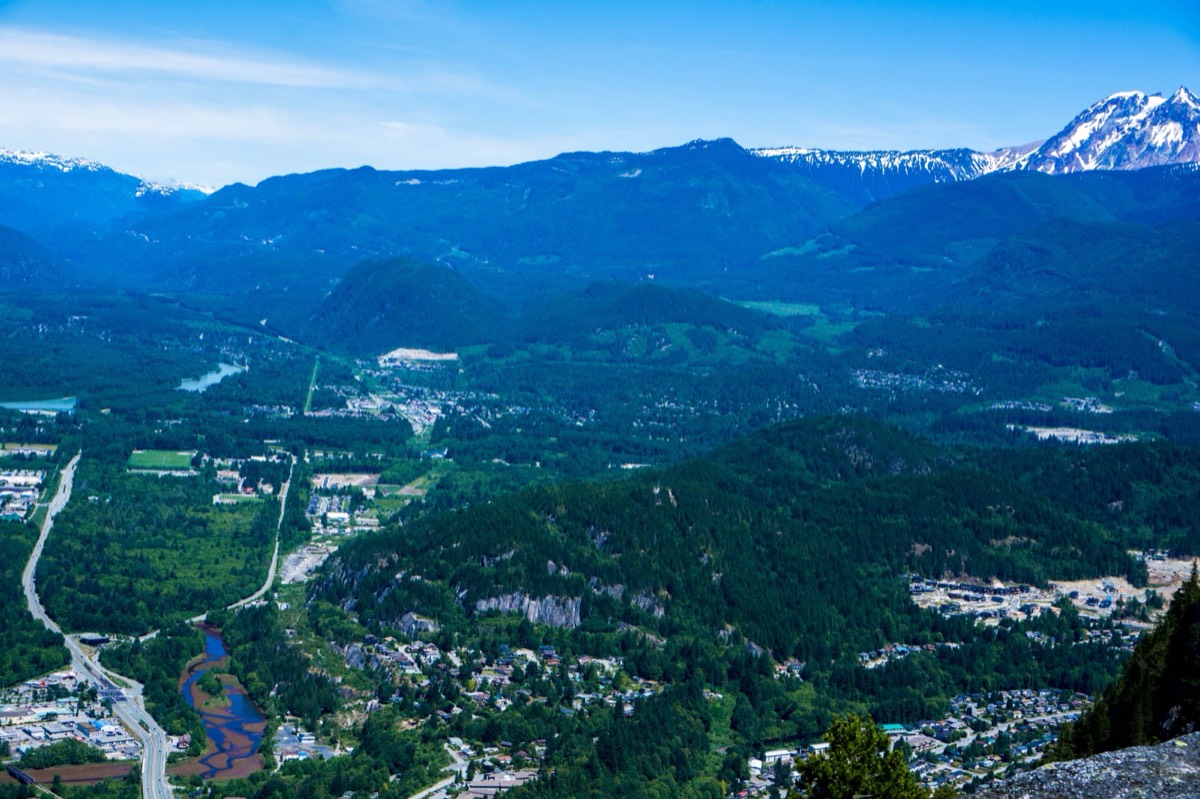
District staff's draft 2027 budget needs 10.4% more property tax, about $342 a year for an average home. Staff prepared it in September, before the election, and nothing is decided until the new council votes. Mayor Sean Easton and two councillors promised a freeze. Here is where the money goes, what a freeze would take, and five questions you can answer before the new council decides.
The short version
- District staff's draft 2027 budget needs 10.4% more property tax in total than 2026. That's about $342 more for an average home, before new services council already said yes to.
- Mayor Sean Easton, Councillor Janice DesJardins and Councillor Laura Prosko each promised a 2027 tax freeze. A decision needs four votes when all seven are there, so they need one more.
- Freezing the District's total tax means cutting, delaying or finding at least $5.7 million, or about $6.5 million counting what council kept in September. Staff haven't published a list of cuts, and none of the three has put a dollar figure on how.
- Renters can feel this too. B.C. caps yearly rent increases for current tenants, so a tax rise can't push their rent past the cap. Rent for new tenants and business rents isn't capped, and landlords factor taxes in.
- No date is set for the new council's first budget meeting or the public information night. Last year's budget passed in January.
What it means for your bill
Try it with your own bill
Type in the District of Squamish part of your 2026 property tax notice. We start with the average home, $3,294.
On your notice it's the District of Squamish (municipal) line. Don't count school, regional district or hospital taxes. What you type stays on this phone or computer. If your home's value rose faster than most in town, your bill rises more than this; slower, less.
- Tax freezeWhat Easton, DesJardins and Prosko promised0%
- Staff's base planCosts already committed, plus repair savings10.4%
- Base plus what council kept in SeptemberOur estimate from the staff tables, not an official number11.9%
- If the safety package comes back tooOur estimate: adds about 1.1%13%
2026 average from the District: $3,294 on an average $1.2 million home. The 11.9% and 13% are our arithmetic from the September 29 staff report tables. 55 or older, a surviving spouse, a person with a disability, or supporting a child under 18? B.C.'s Property Tax Deferment program lets you put off paying as a low interest loan. And don't forget the Home Owner Grant.
The percentages here are increases in the total tax the District collects. That total includes tax from new buildings, which is one reason the average home's bill rose 10.8% in 2026 while the total rose 12.8%. Your own bill also moves with how your home's value changed compared with others in town.
Where the extra $5.7 million goes
About two thirds of the increase is already committed: union and staff contracts, the police contract, transit, the Cheekye debris barrier reserve and loan payments, mostly for the new Public Works Facility. The biggest choice left is how much more to save for future repairs.
| Cost | Share of increase | Average home | Dollars |
|---|---|---|---|
| Wages and benefits under signed union and staff contracts | 2.2% | $71 | $1,175,468 |
| Debt payments, mostly the new Public Works Facility | 1.8% | $58 | $968,802 |
| Royal Canadian Mounted Police contract and support staff | 1.1% | $36 | $594,441 |
| Other (technology, staff hired in 2026, facilities) | 0.6% | $19 | $322,458 |
| Cheekye debris flow barrier reserves | 0.5% | $17 | $278,400 |
| Transit | 0.5% | $16 | $264,154 |
| Already committed | 6.6% | $217 | $3,603,723 |
| Saving for future repairs and replacement (asset reserve) | 2.4% | $79 | $1,311,117 |
| Services council already endorsed, plus critical ones (two firefighters, pedestrian bridge staffing and more) | 1.3% | $43 | $710,577 |
| Critical one time projects | 0.1% | $2 | $38,689 |
| Base total | 10.4% | $342 | $5.66 million more |
The "critical" items include two new firefighters ($345,957) and $125,000 to staff the new pedestrian bridge, which Transport Canada rules require to be staffed for at least a year (staff expect about 18 months). Staff also kept $7.24 million, the tax paid by Woodfibre LNG (liquefied natural gas), out of the daily budget entirely. More on that below.
Your say
What should council aim for on 2027 District taxes?
Every 1% is about $546,000 of services, or about $33 on an average home.
Who promised a freeze
Three of the seven people now on council promised zero. One more wants a full review to find savings. The other three made no freeze promise.
| Member | What they said | Promised a freeze? |
|---|---|---|
| Mayor Sean Easton | "I'm freezing property tax increases for 2027, while working to improve services and amenities." Also pledged to cut wasteful spending. (source) | Yes, 2027 |
| Janice DesJardins | Direct staff to bring a budget with no increase over last year; zero based budgeting, fewer middle managers, referendums on big projects. (source, source) | Yes, 2027 |
| Laura Prosko | Hold property taxes flat in 2027 and 2028 "and build the council support needed to get it done", through budget efficiencies, grants from other governments and partnerships; plus a yearly budget town hall. (source, source) | Yes, 2027 and 2028 |
| Luc Perreault | A full review of the 10 year budget plan to find savings and delay spending that isn't essential, but not by cutting core infrastructure. (source) | No, wants a review |
| Eric Andersen | The only member who was on the last council. Voted with the rest of council for the 12.8% plan in January 2026; wants a bigger industrial and business tax base to take pressure off homeowners. (record) | No |
| Sarah Ellis | Wants clearer reporting on where tax dollars go; open to borrowing for Brennan Park within legal limits. (record) | No |
| Shaun Veltkamp | Spend carefully with cost and benefit tests; bring back a grant writer to win provincial and federal money. (source) | No |
Easton's campaign page says the freeze is meant "to create constraints and accountability for government." Prosko wrote that she'd hold taxes flat without cutting projects or services. Each has named an approach, like cutting waste, zero based budgeting, fewer middle managers or more grants. As of November 12 we found no new statement from the mayor or council on how a freeze would work.
What a freeze would take
First, "freeze" can mean three things: no increase in the total tax the District collects, no increase for existing owners once tax from new buildings is counted, or a flat bill for the average home. The promises don't say which.
Holding the total at the 2026 level means about $5.66 million less spending, or the same amount from somewhere other than property tax, and about $6.5 million counting what council kept in September. A freeze for existing owners could need less. In 2024, staff counted tax from new buildings first, which turned a 12% total into 8.9% for existing owners. The 2027 draft doesn't show that step yet, and staff haven't published the 2027 figure.
Staff's report lists no service cuts to choose from: the space for alternatives is a blank placeholder.
| Option | Roughly how much | The catch |
|---|---|---|
| Drop or delay new staff and services | About $1.2 million | $0.71 million is in staff's base (two firefighters, pedestrian bridge staff and more), plus about $0.49 million council kept in September (a labour relations advisor, a fleet mechanic and more). |
| Pause the step up in repair savings (asset reserve) | $1.31 million (2.4%) | This is the yearly increase, not all repair savings. It's a policy council chose in 2023, and the main capital reserve already starts 2027 at $3.9 million against a $13.1 million target. On October 6 council asked staff for options to raise it, not lower it (unofficial Council Watch summary). |
| Cut existing services | Up to council | Staff haven't priced any. After the 2024 union agreement, council cut about $600,000 (according to an unofficial Council Watch summary). |
| Shift more of the tax to business and industry | Up to council | Doesn't lower the total, it moves who pays: homes less, businesses and industry more. Raising the major industry rate mostly lands on Woodfibre, and District policy sets that money aside, so it wouldn't help the daily budget unless the policy changes. |
| Use Woodfibre LNG's tax for daily costs | Up to $7.24 million | District policy keeps it out of daily spending so the town doesn't depend on one company. It already pays for one time projects in the 10 year plan, Woodfibre is challenging its 2025 and 2026 taxes, and its 2027 assessment isn't known until spring. |
| Raise utility or user fees | Not known | Moves the cost from your tax bill to other bills, like water, sewer or program fees. |
| Committed costs (contracts, police, debt, transit) | $3.6 million (6.6%) | Signed contracts, loans and reserves already promised. Very hard to change in one year. |
Your say
If council lowers the increase, where should it look first?
Each one has a trade off. Woodfibre LNG's money gets its own question below.
The Woodfibre LNG money
In 2026 Woodfibre LNG paid the District about $7.24 million in property tax (the District's frequently asked questions page says $7.7 million). District policy keeps that money out of daily spending and uses it for one time projects, so the town doesn't come to depend on a single company. The 10.4% is worked out without it.
On September 22 the previous council turned down a 10 year tax deal with Woodfibre, 5 to 2. Andersen voted for the deal. Regular taxation continues, and the District is defending Woodfibre's legal challenges to its 2025 and 2026 taxes. Easton, Prosko, DesJardins and Veltkamp said during the campaign they want a better deal. Ellis said Woodfibre should help pay for the capital plan through regular taxes or a fair deal. Andersen voted for the old deal, and Perreault said he would have supported it. The plant's 2027 assessment, and so its 2027 tax, won't be known until spring. Separate Woodfibre and FortisBC payments of $1.35 million each fund a District major projects team in 2027 and are expected to end after that.
Your say
Should Woodfibre LNG's tax money help pay for everyday costs?
Today the District keeps the $7.24 million it gets from the plant for one time projects only.
Behind on repairs
Staff wrote in their October 6 report: "following decades of insufficient investment in capital infrastructure and reserve building, available reserves remain constrained." The District's main capital reserve starts 2027 at $3.9 million, against a minimum target of about $13.1 million. Under the current plan it drops to about $2 million in 2028 and doesn't reach the target until 2034.
Big bills are coming. The landfill fills up in late 2029 or early 2030, and construction on a $27.8 million expansion has to start by the end of 2027. The 10 year capital plan is $357 million, and another $58.7 million of priority projects have no funding source yet. Debt payments rise to 14% of revenue, under the District's own 20% limit.
Your say
Squamish is behind on saving for repairs. How fast should it catch up?
The main capital reserve starts 2027 at $3.9 million, below a $13.1 million target, and won't reach it until 2034 on the current plan.
The community safety package
On September 29 the previous council voted unanimously to send a $580,000 package back for public input: two bylaw officers ($259,450), a Community Safety Plan ($200,000) and BC Housing support work for people without homes ($121,000). It would add about 1.1%, or $35 on an average home. The new council decides whether it comes back.
Your say
Should the $580,000 community safety package go in the 2027 budget?
Two bylaw officers, a Community Safety Plan and BC Housing support work, about $35 on an average home.
Main new items council looked atWhat was kept, removed or sent back on September 29
| Item | 2027 tax | What council did |
|---|---|---|
| Two bylaw officers (community safety) | $259,450 | Sent back for public input |
| Community Safety Plan | $200,000 | Sent back with the bylaw officers |
| BC Housing support work for people without homes | $121,000 | Sent back with the bylaw officers |
| Labour relations advisor | $142,887 | Kept |
| Fleet apprentice mechanic | $125,699 | Kept |
| Infrastructure, housing and job space team (5.5 staff, mostly paid by fees) | $122,650 | Removed; asked for a business case |
| Annex office lease | $65,571 | Kept |
| Service maintenance staff (2.1) | $58,421 | Removed; asked for a business case |
| Roads labourer for new waste bins (half time) | $48,835 | Kept |
| Squamish Off Road Cycling Association partnership increase | $36,250 | Kept |
| More porta potties (3 all year, 3 seasonal) | $20,000 | Kept |
| Hiring the next chief administrative officer | $75,000 | Kept |
| Smaller items (police clerk lead, software, partnerships, free transit from the Welcome Centre and more) | About $67,000 | Kept |
The bigger picture
Squamish has raised its total property tax by about 12% or more for three years running. Staff point to a fast growing town that put off saving for repairs for years, new firefighters and police, loans for the Public Works Facility, and more loans coming for the dikes and the Mamquam Bridge deck.
| Town | 2026 increase |
|---|---|
| Langford | 15.1% (draft in February; final not confirmed) |
| Squamish | 12.8% |
| Whistler | About 6.7% to 6.9% |
| Kamloops | 5.7% (after delaying new police hires) |
| Port Moody | About 4% |
| North Vancouver District | 3.53% |
| West Vancouver | 3.43% |
| Vancouver | 0% |
During the campaign Easton called 12.8% "the highest in the province." Langford's 2026 draft was higher, but Squamish was well above every nearby town we checked.
And 2028 looks bigger. Staff forecast 12.7% for 2028. New police positions that a reserve has partly covered until now land fully on the tax bill (2.3%). Loans for the Mamquam Bridge deck, the Xwu'nekw Park sea dike and raising the Squamish River dikes add 2.8%, and transit expansion adds 1.5%. A 2027 freeze paid for with one time money or a pause in repair savings would carry into 2028, on top of that forecast. After 2028 the forecast eases: 7.9% in 2029, 5.7% to 7.1% through 2032, and about 4% a year from 2033. Prosko's promise covers both 2027 and 2028.
What happens next
- Council budget workshop for the new council: date not set. A November 10 meeting was cancelled.
- Public information night: staff said it was planned for November. No date is posted yet.
- Adoption: an unofficial summary of staff's early timeline pointed to December. Last year's plan passed January 13. The new council sets the pace.
- Tax rates and bills: rates are set in spring 2027, after BC Assessment's revised roll, and bills follow.
- Hear when dates are set: [get the free Friday email](#signup).
- Next regular council meeting: Tuesday, November 17 at 6 p.m. Its agenda isn't out yet.
How to have your say
- Answer the questions on this page, and say what you'd keep or cut in the comments below.
- Email the District at budgetfeedback@squamish.ca. It goes to council and into a What We Heard report.
- Read the reports and answer the District's questions at Let's Talk Squamish: Budget 2027.
- Write to council or speak at a meeting.
We'll update this story when the new council's budget dates are set. Background: Will Squamish property taxes go up in 2027? and Why taxes went up 12.8% in 2026.