Ottawa announced $200 million for Woodfibre LNG on November 13. What it means for Howe Sound: tankers, flaring and local taxes, explained
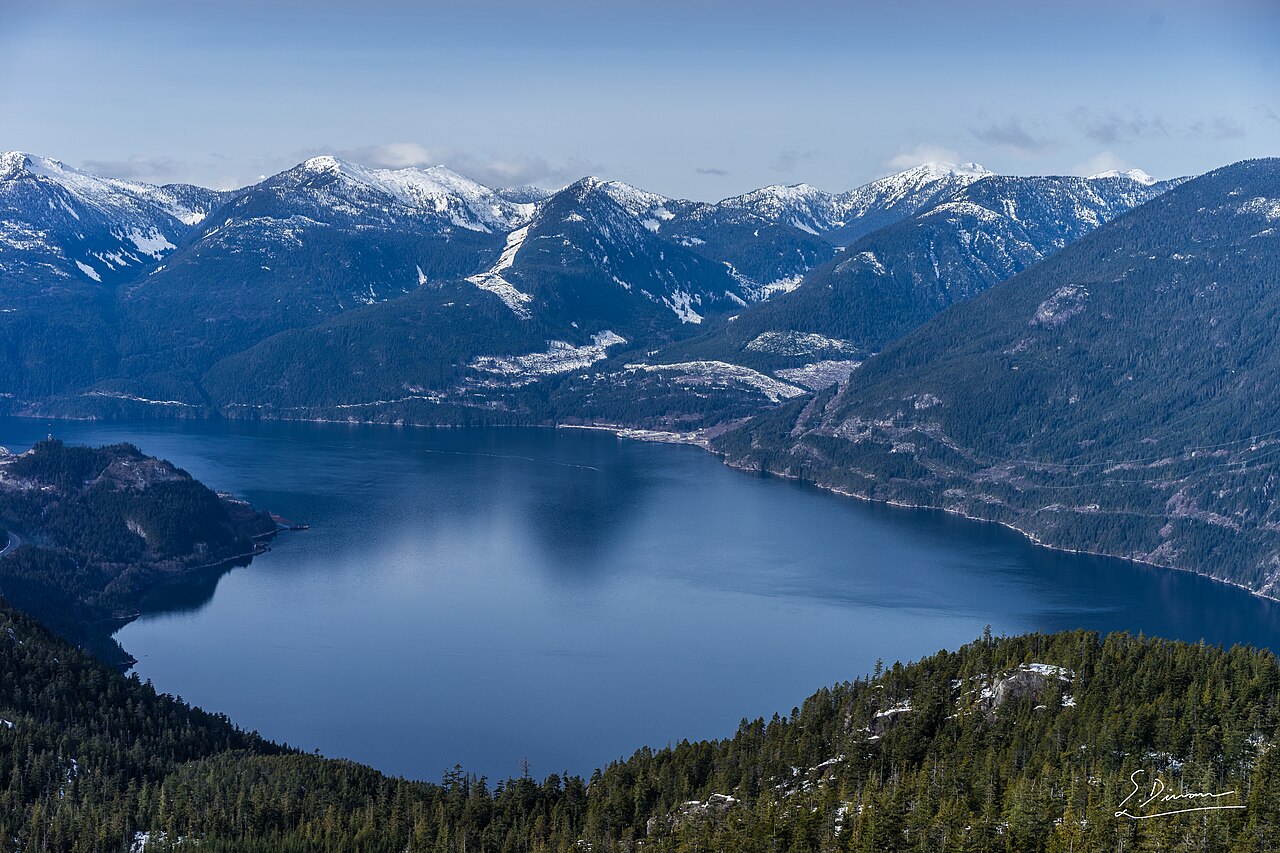
The federal money, announced November 13, pays for equipment upgrades at the gas export plant across Howe Sound and, in Ottawa's words, the "exploration of a potential second phase." Ottawa has not said whether it is a grant, a loan or an ownership stake.
In plain words
- The federal government is putting $200 million over three years into the Woodfibre LNG gas export plant being built about 7 kilometres southwest of Squamish.
- The money is meant to help the plant ship up to 24% more liquefied gas than it was designed for and to explore a possible second phase.
- Ottawa hasn't said whether it's a grant, a loan or a stake, and by our math more gas could mean 8 to 10 more tanker ships a year in Howe Sound.
- You can comment on the plant's flaring and air pollution permit until November 29, and the first open house is Tuesday, November 17 at Britannia Beach Community Hall.
What the $200 million pays for
Natural Resources Canada announced the money in a news release on November 13, datelined Squamish. It says the plant "was originally designed to produce 2.1 million tonnes" of liquefied natural gas (LNG) a year, and the investment will:
- Raise that to 2.5 to 2.6 million tonnes a year, an increase of 19 to 24%
- Make the plant more reliable and efficient
- "Enable exploration of a potential second phase of the project"
The Financial Post reported, citing Natural Resources Canada, that the money will pay for upgrades to the plant's cooling systems and for commissioning and mooring its floating storage tanks. Those tanks are two converted tanker ships (Squamish Chief) holding 250,000 cubic metres of liquid gas (Enbridge). The Globe and Mail, citing an unnamed source, reported the same uses. The Canadian Press reported the money is spread over three years.
What Ottawa has not said
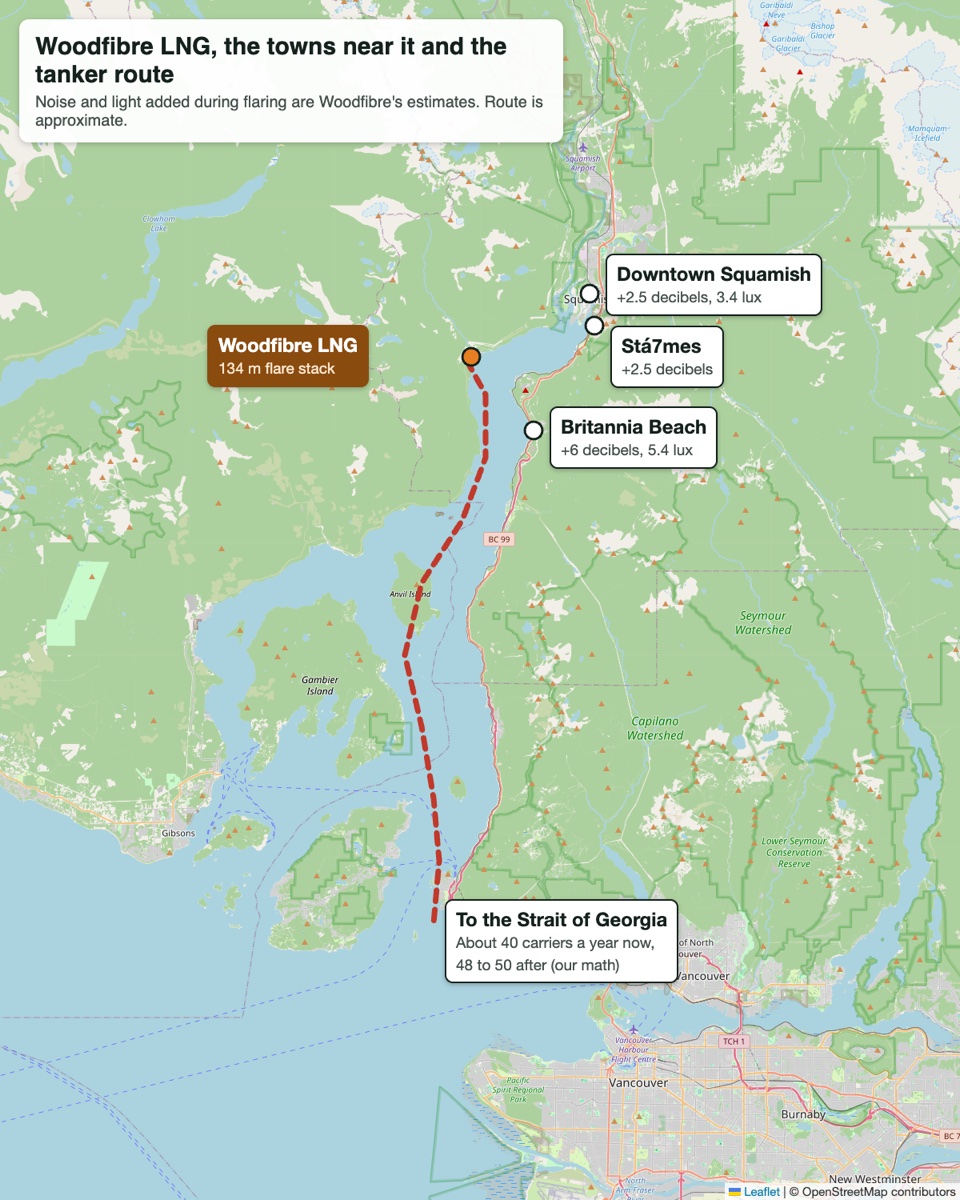
The release names no program and gives no terms. It does not say whether the $200 million is a grant, a loan or an ownership stake, or whether any of it is paid back. The Financial Post asked Natural Resources Canada why federal money is going to the project and got no answer before it published. The release cites Woodfibre's claim that the plant's emissions intensity is about nine times below the global average for LNG plants, equal to about 140,000 cars a year compared with a typical plant. It gives no figure for how the extra output would change emissions.
Earlier federal support for B.C. LNG named its source:
- Cedar LNG, majority owned by the Haisla Nation: up to $200 million in March 2025 from the Strategic Innovation Fund, as a contribution agreement (release)
- LNG Canada in Kitimat: $275 million confirmed in June 2019, including $220 million from the Strategic Innovation Fund for more efficient gas turbines (release)
For scale: Woodfibre put the project's total cost at US$8.8 billion in August 2025 (LNG Prime). Even counting Canadian and US dollars as equal, $200 million is a little over 2% of that (our arithmetic).
More gas, more ships?
No one has published how many tankers a bigger plant would need. Here is what is known.
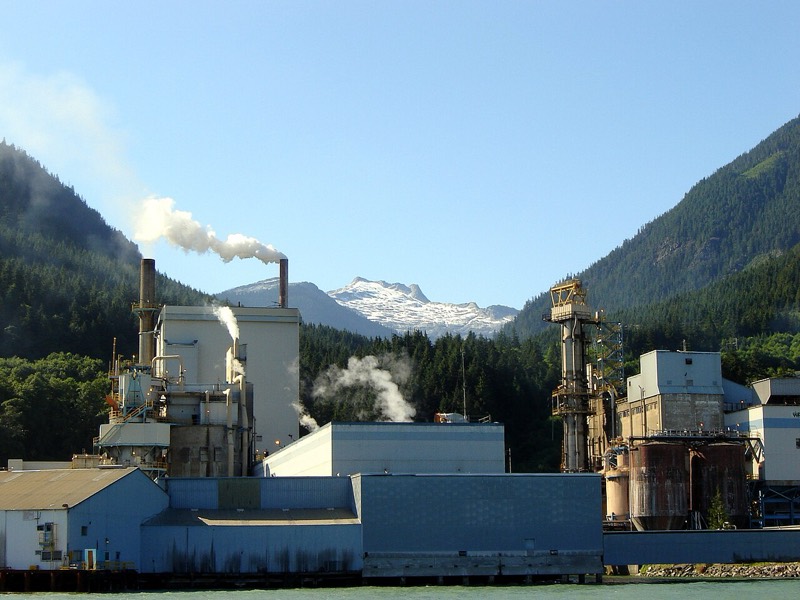
- Now: Woodfibre's October 2026 air permit application says carriers will arrive about 40 times a year, three to four a month, each helped by three tugboats and at the dock about 30 hours to load (Squamish Chief). The company gave the same 40 a year to the provincial environmental assessment in 2015. Each carrier passes through Howe Sound twice, in and out.
- After the upgrade: if ships stay the same size, 19 to 24% more gas would mean about 48 to 50 carriers a year, or close to 100 trips through Howe Sound. That is our arithmetic, not a company figure.
Transport Canada's marine safety review of the tanker route, the Technical Review Process of Marine Terminal Systems and Transshipment Sites (TERMPOL), is available only on request.
Flaring, noise and air
At an October 1 open house, Woodfibre said startup in 2027 will bring six to eight months of flaring (burning off excess gas) several days a week from a 134 metre stack. Flaring then eases during about two years of stabilizing, to less than once a month by about three years after startup. In 2015 the company had projected a startup period of three to four weeks (Squamish Chief).
- Flames up to 60 metres, or 90 metres in a rare emergency
- Noise during flaring about 6 decibels above normal background at Britannia Beach, a clearly noticeable rise, and 2.5 decibels in Squamish and Stá7mes (Woodfibre's estimates)
- Light from the flame about 5.4 lux at Britannia Beach and 3.4 lux in Squamish. A typical street light is 10 to 15 lux; a full moon gives less than 1.
Those figures are for the plant as designed. Woodfibre has not said whether more output changes flaring, noise or air emissions. Chief executive Luke Schauerte told the Financial Post the company is committed to reducing impacts, including flaring.
How to have your say
- Flaring and air permit: Woodfibre has applied to the BC Energy Regulator for a permit covering air emissions from its flares, heat medium furnace, thermal oxidizer, backup diesel generators, diesel firewater pumps and vents (application 455458). Email comments to Woodfibre at info@wlng.ca, with a copy to the regulator at waste.management@bc-er.ca, by November 29, 2026 (Squamish Chief).
- Open houses on this permit and a separate stormwater permit, all 4:30 to 7:30 p.m.: Tuesday, November 17 and Wednesday, December 2 at Britannia Beach Community Hall (101 Church Street); Thursday, November 19 and Thursday, December 3 at Executive Suites (40900 Tantalus Road, Squamish). The December open houses come after air permit comments close, so send those by November 29. The stormwater permit has its own comment deadline; ask Woodfibre at info@wlng.ca.
- Questions people may want to ask at the open houses: Will 2.6 million tonnes change flaring hours, noise or light at Britannia Beach? How many carriers a year at the higher output? Who buys gas beyond BP's contracts? Is any of the $200 million paid back?
- Federal money: questions go to the local Member of Parliament (MP), Patrick Weiler, at Patrick.Weiler@parl.gc.ca (his Parliament page).
Who has to say yes to a bigger plant
| Approval | Who decides | What it says now |
|---|---|---|
| Federal export licence (2017) | Canada Energy Regulator | Caps gas at 3.34 billion cubic metres a year, about 2.4 million tonnes by our math, below the new target |
| Squamish Nation agreement | Squamish Nation | 25 binding conditions; the Nation says any change gets a full review |
| Environmental assessments | B.C. and Canada | Woodfibre says it has met them for 2.6 million tonnes |
| Air emissions permit (application 455458) | BC Energy Regulator | Under review; comments close November 29 |
- Woodfibre: Schauerte told the Financial Post the plant has already met the regulatory assessments needed to reach 2.6 million tonnes but may require additional permitting. "We're at early stages on what the future expansion could be," he said. No application to raise capacity appears on Woodfibre's regulatory filings page.
- Export licence: approved in 2017 for 40 years, capped at 3.34 billion cubic metres of gas a year including a 15% tolerance (decision). Converted with the Canada Energy Regulator's factor of about 1,380 cubic metres per tonne (table), that is about 2.4 million tonnes, below the new target (our arithmetic). Woodfibre has not said whether it will seek a licence change.
- Squamish Nation: the Nation ran its own environmental assessment and set 25 legally binding conditions. Chair Sxwíxwtn Wilson Williams said in the release that its agreement "will apply to every aspect of this project, today and into the future." Earlier in 2026 the Nation said it would fully review any request to change that agreement (Castanet).
The release is the first federal announcement we found that mentions a second phase. In March 2026, Energy Minister Tim Hodgson told an energy conference in Houston, "I know Woodfibre has ambitions to double and triple the size of their production" (Castanet).
What it means for Squamish taxes
Nothing in the announcement changes what Woodfibre pays the District. Upgraded equipment could raise the plant's assessed value, which BC Assessment sets, but no one has published an estimate.
Woodfibre paid about 12% of the District's municipal property taxes in 2026, up from 3% in 2025, and the District puts the extra into reserves (our explainer). Council rejected a 10 year tax deal worth at least $142 million on September 22, 2026, so regular taxes apply and Woodfibre's court cases against the District continue (the tax deal page). The new council sets the 2027 tax rates, including the rate for major industry, in spring 2027.
What people are saying
- Energy Minister Tim Hodgson (release): "Canada is blessed with abundant energy resources, unimpeded access to the Pacific Ocean and a highly skilled workforce," adding that Canada needs strategic investments to turn those advantages into lasting economic strength.
- Lorne Doerkson, premier designate after his BC Conservatives won the October 24 provincial election, said in the release that the plant is about three quarters complete and runs on B.C. hydroelectricity, and that he looks forward to seeing its first cargo sail from Howe Sound next year.
- Jeremy Valeriote, BC Green Member of the Legislative Assembly (MLA) elect for West Vancouver to Sea to Sky, called it another "gift for the fossil fuel industry" (Canadian Press via CHEK).
- Marc Lee, senior economist at the Canadian Centre for Policy Alternatives: "Why can't this project go ahead on straight up commercial terms?" (same story).
- As of November 15 we found no public comment from Mayor Sean Easton or MP Patrick Weiler.
The plant by the numbersOwners, buyer, cost, jobs, pipeline and emissions
The plant by the numbers
- Owners: Pacific Energy Corp. (70%), part of the Singapore based RGE group (My Kootenay Now), and Enbridge (30%) (Woodfibre)
- Buyer: BP buys all of the plant's designed output under three 15 year contracts (Enbridge). Who would buy any extra has not been said.
- Cost: US$8.8 billion in total as of August 2025, up from a 2022 estimate of US$5.1 billion (LNG Prime). Enbridge pointed to permit delays, building code changes, a second floating hotel for workers and site conditions (Gas Processing News)
- Progress: about three quarters built, Doerkson said in the release; operations are expected in late 2027
- Jobs: about 1,500 people on site every day during construction and 100 full time jobs once running (release)
- Gas supply: FortisBC's new pipeline from Coquitlam, about 50 kilometres, including a tunnel under the Squamish estuary (Squamish Reporter)
- Emissions: the plant runs on BC Hydro electricity. Woodfibre's 2023 estimate was about 83,000 tonnes of greenhouse gases a year at its designed size (Woodfibre roadmap). It has not published a figure for a bigger plant; scaled straight up with output, it would be roughly 99,000 to 103,000 tonnes (our arithmetic).
TimelineFrom the 2015 assessment to the 2027 startup
Timeline
- 2015: Woodfibre's assessment projects 40 carriers a year and a startup period of three to four weeks
- 2017: Ottawa approves a 40 year export licence
- August 2025: Woodfibre puts the total cost at US$8.8 billion
- March 2026: Hodgson's Houston remarks on doubling or tripling
- September 22, 2026: Squamish council rejects a 10 year tax deal
- November 13, 2026: $200 million announced
- November 17 to December 3, 2026: open houses
- November 29, 2026: air permit comments close
- Late 2027: operations expected to begin
More background: our Woodfibre LNG issue page.
Source: Woodfibre LNG