Mayor Easton says parking cuts aren't working. What he wants instead
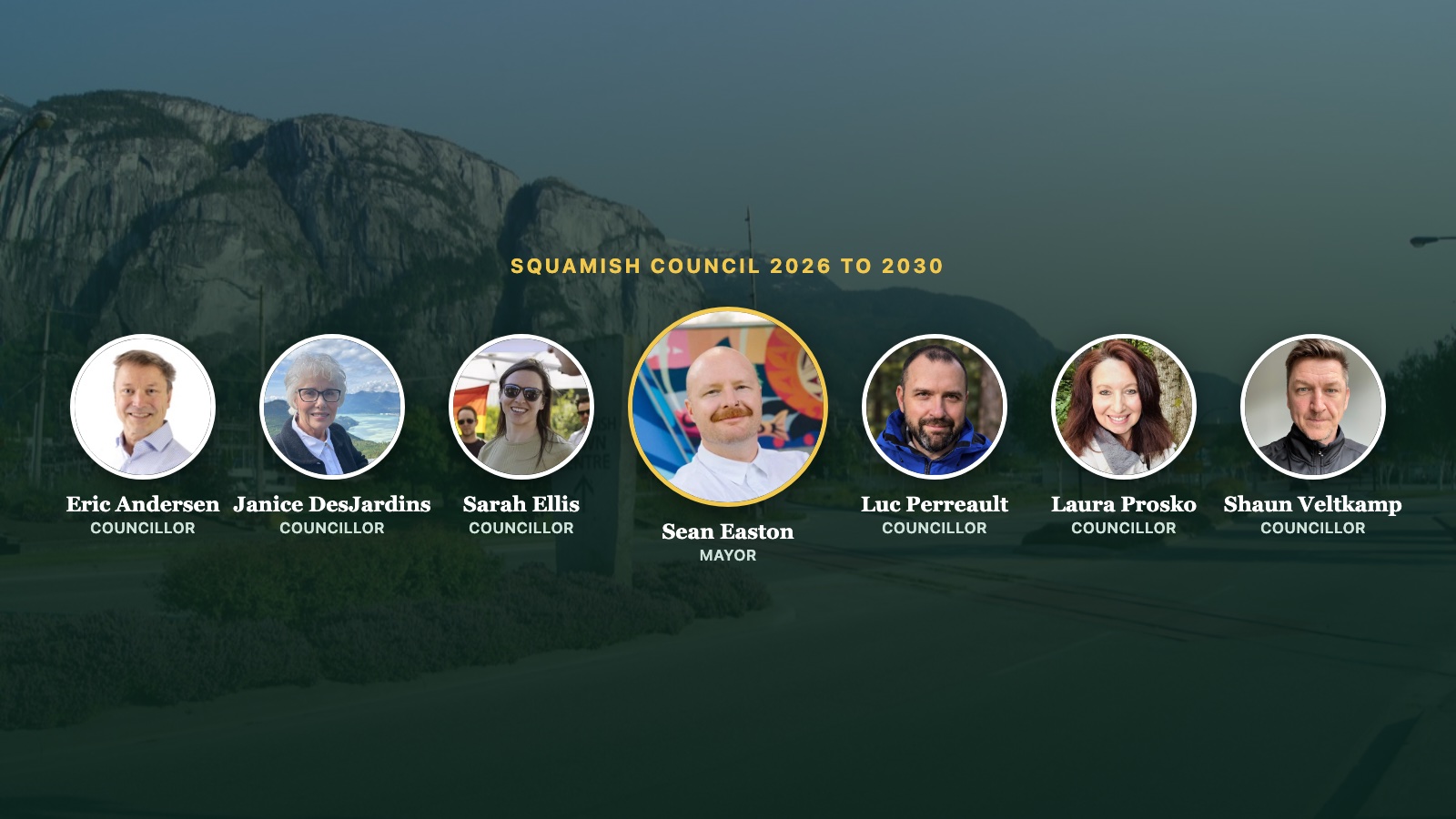
Squamish's new mayor says letting new buildings have fewer parking stalls has made parking worse, because transit is still weak. Sean Easton told The Squamish Chief he wants residents to define what the town needs, with council's new strategic plan in the coming months setting goals to measure.
In plain words
- New Mayor Sean Easton says cutting parking in new buildings has not worked in Squamish.
- He says parking from new buildings spills onto neighbouring streets, and fewer stalls only make sense with much better transit.
- He wants council to judge itself on real results, like homes people can afford, not on finished plans.
- Council will write its plan for the next four years in the coming months, but no dates for it or for public input are set yet.
What he says isn't working
Letting new buildings have fewer parking stalls than the rules normally require is not working in Squamish, Mayor Sean Easton told The Squamish Chief at the Housing Central Conference in Vancouver last week.
The District's view has been that fewer stalls near bus routes encourages transit use and lowers emissions. Easton called that "an ideologically grounded approach" and says the parking challenge has gotten worse. We found no District data that proves or disproves that parking has gotten worse. He says parking needs from new buildings are "bleeding out into the community," and that less reliance on cars needs a more robust transit system. Many residents commute to the resort or to Vancouver, he says.
Asked about a recent Government Road proposal with far fewer stalls than bylaws normally require, he said many residents feel left out, and neighbours feel the effects without having a say. We have not checked whether provincial rules limit what council can require on parking near transit.
When residents can weigh in
Easton says change will come through council's strategic plan, its four year list of priorities, written in the coming months with specific outcome measures to guide District staff. The last plan covered 2023 to 2026.
- No dates are set yet for the plan or for public input.
- Last time, the District asked the public to comment on its draft.
- Follow our parking, housing and scorecard pages.
How council has handled parking before
In July 2025, council let a Cleveland Avenue building drop all 20 required home spaces and all eight commercial spaces, for a payment of $240,000. A 2020 District parking study lists $15,000 per space; we could not find how the $240,000 was set.
But in 2025 council also told one developer it could not support a parking cut at University Highlands because of a lack of transit. That is the same reason Easton gives now.
Early in 2026, Northyards residents opposed fewer spaces in a proposed six storey rental building on Aspen Road; we found no final decision. BC Transit added weekday trips to Route 1 Brackendale on January 4, 2026. A Sea to Sky regional bus was studied in 2017, and the District once said work was underway to start service in fall 2019. We found no current launch date.
Results, not checklists
Counting finished tasks is "a false proxy to success," Easton says, meaning it does not show whether life got better. He pointed to a report saying the Housing Action Plan was complete or 95 per cent done, helped by the federal Housing Accelerator Fund, which gave the District over $7 million in 2024 to speed up more than 200 homes over three years. He called Squamish the second most expensive community in the province; we could not confirm that or the 95 per cent. He said vacancy is zero; the long term rental rate was 0.2 per cent in March 2026.
He wants residents to say what they need, then council to set goals and measure them. He says satisfaction in the District's own survey is declining. In the 2025 survey, a separate question found 58 per cent said things were worse than five years ago. The top issue, at 38 per cent, was services keeping up with growth. Parking was grouped with traffic and transit in one answer, which ranked third.
Background
Easton beat Jenna Stoner by 175 votes, with about 42 per cent of votes for mayor (our arithmetic). Turnout was about 45 per cent. At the conference he led a session with Zero Ceiling and DWIFT Housing Society, two housing nonprofits he is connected with. Read the full interview.
Source: The Squamish Chief