Squamish Nation lays Notcho about 40 feet under Howe Sound, not on land
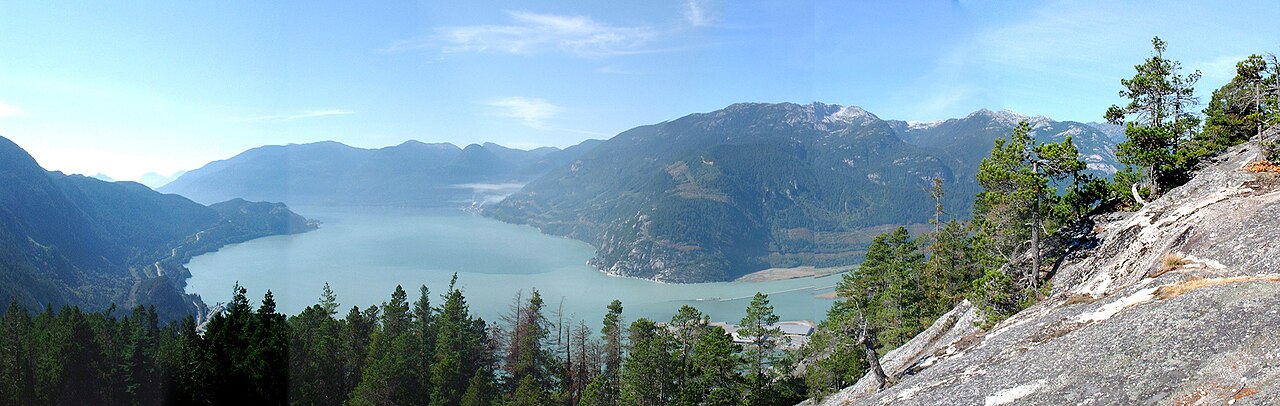
Earlier this month the Squamish Nation planned to bury Notcho, the humpback killed by a BC Ferries vessel in October, on land, but it has now lowered his remains in recycled nets into Howe Sound near one of its traditional villages. Raising and drying his bones should take 6 to 12 months, and a ceremony and whale oil workshops are planned with no dates set.
In plain words
- The Squamish Nation lowered the remains of Notcho, a humpback killed by a BC Ferries vessel in October, about 40 feet under Howe Sound.
- Earlier this month the Nation planned to bury him on land; it has not said why that changed, and the new update makes no request about the site.
- Once the flesh is gone, a diver will raise the bones to dry in the sun, which should take 6 to 12 months in all.
- A ceremony and whale oil workshops are planned, but no dates are set and the update does not say if people who are not members can attend.
Why Notcho is under water, not on land
Notcho's skeleton and soft tissue were put into recycled netting, tied onto a line and lowered into Atla7katsem (Howe Sound) near one of the Sḵwx̱wú7mesh Úxwumixw (Squamish Nation) traditional villages. He now rests about 40 feet below the surface, Chairperson Sxwíxwtn Wilson Williams said in a November 24 update.
This is a change of plan. On November 13, the Nation said Notcho was being moved from the beach to a spot further inland, and that this had to be done before a ceremony to mark his final burial on its territory. It also asked people to stay away from the beach work site (Squamish Nation, Nov. 13). Neither update explains why the plan changed. The November 24 update makes no new request about the beach or the underwater site, and does not give its exact location.
The Nation says the choice followed a lot of discussion and technical review of environmental outcomes, cultural values, ecological benefits and its stewardship duties, guided by Squamish values and scientific best practices. It calls the work one of the most significant marine mammal stewardship projects it has taken on in recent years. It says it led the assessment, decision making, cultural protocols, recovery and long term management of the remains, as the main steward and decision maker in its territory.
What comes next for the bones
- Staff will check the underwater site regularly and record how the remains break down.
- Once the flesh is gone, a diver working from a boat will bring the bones back up.
- The bones will then bleach in the sun and dry out.
- The whole process is expected to take 6 to 12 months, roughly May to November 2027.
- The update does not say where the skeleton will be kept or shown.
A ceremony and workshops
Staff will work with cultural leaders, Elders, knowledge holders and community members to plan a ceremony to honour Notcho and mark his return to Howe Sound. More workshops are planned to turn the remaining blubber into whale oil, so that all usable materials are treated with care and respect. Staff are also looking at workshops on using whale oil, which may include making soap and margarine, as a way for generations to learn together and revive culture. No dates are set, and the update does not say whether people who are not Nation members can attend.
How Notcho died
- October 18: the Queen of Surrey hit a whale south of Grace Island, on the Horseshoe Bay to Langdale run (CHEK News), going 16 knots (CBC News).
- October 26: ferry crews spotted the dead whale near Grace Island (CBC via Yahoo).
- Paul Cottrell of Fisheries and Oceans Canada's marine mammal response team said it was the same whale. His tail and tail stock were missing (CBC News).
- A Coast Guard hovercraft towed the body to Xwemelch'stn (Capilano band lands), where the Nation held a viewing for members (Squamish Chief).
- The Nation posted updates on October 30 (Whale returned), November 3 and November 13.
Notcho and other ferry strikes
The whale research group known as MERS named Notcho in 2017 for the notch in his tail (CHEK News). He was known to migrate to Hawaii (Powell River Peak).
Global News reported in September 2025 that a humpback died after a collision with the BC Ferries vessel Northern Expedition (Global News). BC Ferries has signed a conservation agreement under the Species at Risk Act, the federal law that protects wildlife at risk, with Fisheries and Oceans Canada and Transport Canada (Coast Reporter). MERS wants ferries to use the Whale Report Alert System and says a humpback had been reported in the area before the strike (CHEK News).
What is still unknown
- Results of the necropsy, an animal autopsy, Fisheries and Oceans Canada was expected to do (North Shore News).
- The exact site, the cost, and who pays.
- Whether BC Ferries faces any penalty.
- Whether any permit was needed to place the remains in the water.